Follow The Literary Fantasy Magazine 2026 on BackerKit.

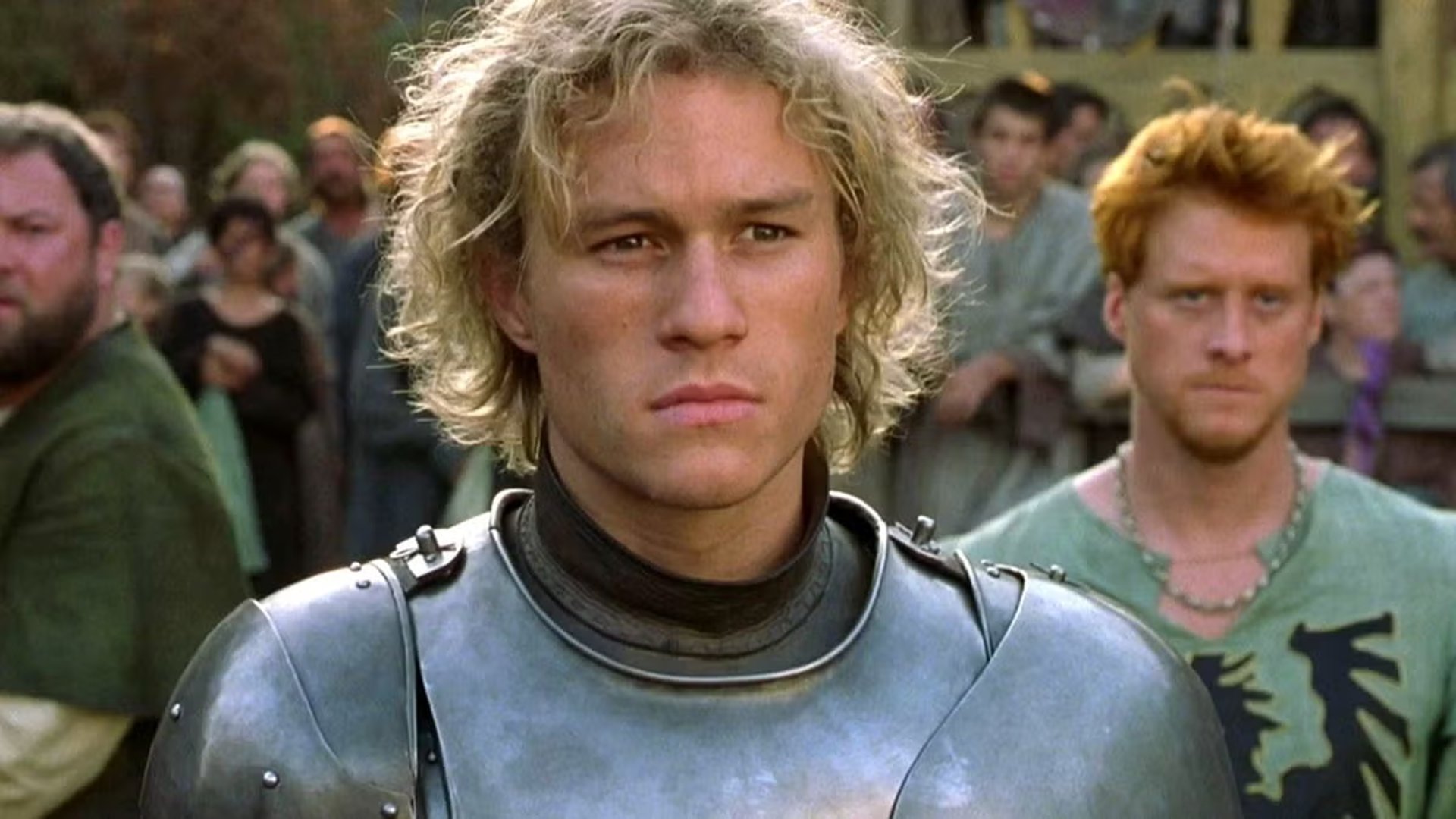
How ‘A Knight’s Tale’ Helped Me See My Own Journey
A Knight's Tale isn't just a film about tournaments and swordplay—it's an exploration into identity, and how those we surround ourselves with can shape us into who we wish to become.
BLOG POST
M.P. Norman
1/2/20265 min read
Some stories stay with you not because they are historically accurate or perfectly crafted, but because they remind you of something you believe about yourself. For me, Brian Helgeland’s 2001 film, A Knight’s Tale, is one of those stories.
Beneath its mixture of medieval jousting in the subtle English countryside surrounded by castles, and rock-and-roll anachronisms (and everybody loves a bit of Queen, don’t they?) lies a narrative about identity, ambition, and the people who shape us along the way, not necessarily family but those close groups of friends that you wish were family.
When I rewatch the film (oh, mainly on DVD, or nowadays on a streaming platform), I find myself looking less at the armor and tournaments and more at the characters whose struggles feel surprisingly familiar.
William Thatcher is a peasant who dreams of becoming a knight. Once the original knight and William’s lord, Sir Ector, dies, I often ask myself: Who do you have the right to become? His journey is less about winning tournaments and more about refusing to accept the limits imposed on him from birth.
I connect with William because he isn’t naturally destined for greatness, but because he chooses it, stumbles through it, and fights for it at every turn in the road, at every stable door, at every inn’s table with fiery Frenchman drinking flagons of wine, and every boat that floats down the river while dressed in armor that weighs a ton.
His ambition feels human rather than heroic, which makes his successes feel earned and, more importantly, appreciated by us, the audience. Watching him reminds me that self-reinvention isn’t arrogance; sometimes it’s survival (because it has to be, right?). And knowing Heath Ledger would later bring this same raw intensity into roles like the Joker only deepens that sense of vulnerability wrapped in boldness as an actor, or Heath’s character, unafraid to transform himself.
Yet William’s story wouldn’t resonate nearly as deeply without the people who surround him.
Wat and Roland, his loyal friends, provide the kind of grounded support that keeps dreams from collapsing under their own weight, even as they face a world that just wants to crap on them daily. They complain, joke, scrap amongst themselves, and get scared. Still, they stay faithful to William and his dreams, not just for William himself, but William’s belief in all of their destinies.
Mark Addy’s warmth as Roland feels even more poignant when you know he would later play King Robert Baratheon in Game of Thrones, another flawed but deeply human leader in a harsh fantasy world. It’s as if Roland’s steadfastness echoes forward into Westeros, reminding us that even kings need loyal friends (sorry, Sean Bean, always being bumped off in almost every big role he has had on the big screen).
Wat, played by the fantastic and charming Alan Tudyk, brings a chaotic energy to the group—loud, impulsive, and fiercely protective.
Tudyk’s presence is almost prophetic when viewed through the lens of his later career: the sharp-witted pilot Wash in Firefly (sadly a one-hit wonder for all you Browncoats out there), the voice of K-2SO in Rogue One, in Resident Alien, as an extraterrestrial who crash-lands on Earth, and countless other sci-fi and fantasy roles where humor and heart intersect. Seeing him in A Knight’s Tale feels like watching the spark before the wildfire, a glimpse of the versatility and spirit he’d carry into so many beloved universes (that have populated a never-ending catalogue of titles bursting from my film collection).
Then there’s Chaucer, the wild card of the group. Paul Bettany’s flamboyant confidence masks his vulnerabilities, and he brings humor and heart to the story. His later transformation into Vision in the Marvel Cinematic Universe—and, earlier, his turn as the tormented Silas in The Da Vinci Code—show the breadth of emotion he can embody. But in A Knight’s Tale, you see the first hints of that ability: the expression, the drama, the ache beneath the theatrics of just wanting to belong.
Chaucer reminds me of friends whose charisma masks the messier realities of their lives. Instead of being dismissed, he is accepted (faults and all), which makes the group’s bond feel even more real within the film and outside, in the real world.
Of course, every hero’s journey needs a worthy antagonist, and Count Adhemar, played by Rufus Sewell, delivers that presence with cold precision and malice. Sewell has a remarkable talent for embodying characters who seem carved from sharp edges, and something he would continue to explore in fantasy and alternate-reality roles throughout his career.
In Dark City, he navigates a world twisted by unseen forces; in The Illusionist, he again plays a figure of authority and control; and in The Man in the High Castle, he steps into an alternate-history dystopia with chilling conviction. In Abraham Lincoln: Vampire Hunter, his portrayal as Adam, the 5,000-year-old leader of an order of vampires. Knowing this makes Adhemar’s effortless intimidation in A Knight’s Tale feel like the beginning of a pattern: Sewell excels at playing men who represent the systems or expectations the protagonist must overcome.
Adhemar isn’t just William’s rival; he’s the embodiment of a world that insists people stay in their place.
Even Prince Edward contributes to the film’s message. Though he seems distant and powerful, he recognizes William’s courage and acknowledges his worth without regard for class. Edward represents what it looks like when someone with power chooses fairness over tradition. His recognition of William is not charity; it is respect.
Ultimately, what moves me most about A Knight’s Tale is that its characters prove the world doesn’t give us identity—we claim it, because we have to.
And interestingly, the same can be said of many of the actors who brought these characters to life. Ledger, Addy, Tudyk, Bettany, Sewell. Each went on to reshape themselves again and again, stepping into worlds of fantasy, sci-fi, and myth, as if continuing the film’s central theme in their real careers.
William becomes a knight because he refuses to be defined by the accident of his birth, but also because the people around him choose to believe in him. The film—and the actors who made it—remind me that ambition isn’t a solitary pursuit; it’s braided with friendship, loyalty, and the courage to challenge what others say is impossible.
When the final match ends and William raises his visor to the cheering crowd, it isn’t just a victory for him—it feels like a victory for anyone who has ever dreamed of being more than they were told they could be. And maybe that’s why this story sticks with me: it whispers that reinvention is within reach, and that the people who walk with us often determine how far we can go, both on the screen and far beyond it.
It reminds me of my life: I started off as an artist, drawing and painting the worlds I wanted to see and live in. Those images were my way of reshaping reality, of proving that imagination could be stronger than circumstance. But over time, with help from my family and friends, that impulse evolved. Now I find myself transforming into a writer, and someone who can not just draw a world, but build one from language, from emotion, from the parts of myself that never fit neatly on a canvas.
So, in the eternal words of Queen, “We will, we will rock you, sing it!”

Art by Kim Holm
Logo by Anastasia Bereznikova
Contact: editors@thearcanist.net | business@thearcanist.net
Copyright © 2025 The Arcanist: Fantasy Publishing, LLC
ISSN: 3069-5163 (Print) 3069-518X (Online)