Back Old Sorcery on BackerKit for exclusive rewards!

I Was Once Yours
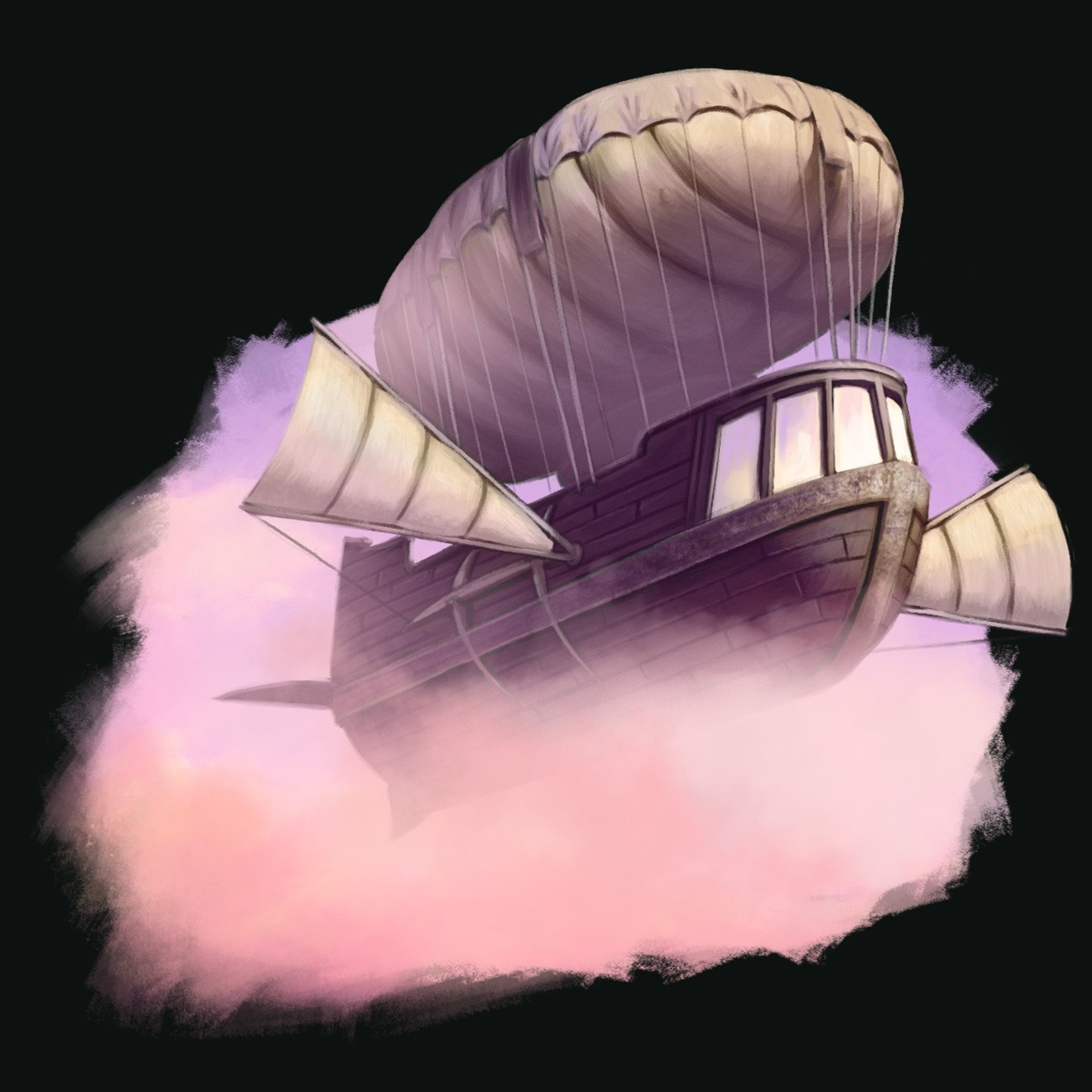
As the airships appear on the horizon, it's clear to Artavan that the cliff wyverns, in the height of their breeding season, will destroy his people's fleet if he does not act. Fighting off the draconic swarm, he must also resist the beast inside him, which is never far from emerging.
SHORT FICTIONGASLAMP FANTASY
Andrew D.H. Moore
3/13/202618 min read
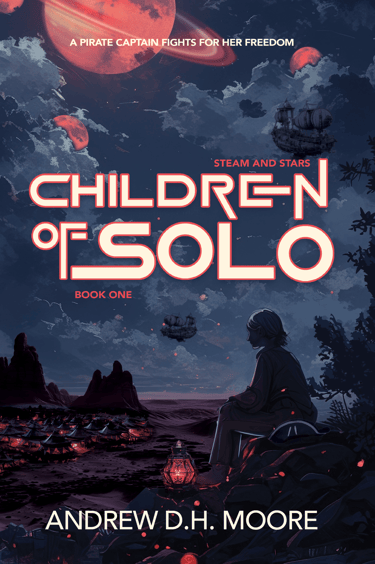
Children of Solo, an award-winning novel by Andrew D.H. Moore, is available now on the Arcanist Webstore and other retailers!
Blood: a pearl droplet on the meat of his thumb. Glass: a sliver, imperceptible aside from subtle pressure between two layers of skin. Teeth: parallel to the wound, sucking at the shard. It is no use.
Artavan swears amid the percussion of the glass grinder crashing to the floor. A pocket watch in his leather apron chirps: two hours. The blood brings relief that it exists at all. It is him, small red pieces of him, free to bead and run. He checks his reflection in the polished lighthouse lens. A russet smear on his front teeth. He moves his tongue back and forth. His pulse remains steady. The creature inside, growing within, becoming him, remains dormant today.
He sighs. There can be no distractions. Not today. Not with the expedition scheduled to return in two hours. Will they bring good news of distant lands, or more disappointment? This time of year is the breeding season. The wyverns on the cliffs often accost incoming dirigibles, thinking them rivals.
“Grin!” he yells down the ladder.
Apneic snores echo below.
“Grin!” louder this time. He waits. Scuffling, swearing, and banging ensues. Grin the Goblin appears at the foot of the ladder. Soot-stained. Wrench in hand.
“I’m busy, Artavan,” Grin complains.
“Start the furnace.” Artavan says.
“Are you alright?”
“Fine. Just get it running.”
Grin checks his own watch. Complies.
Artavan steps outside into the silence. Below him the River Desdemona, named for that miraculous woman he’d loved, a prophet who abandoned her disciples. Outpost K clings desperately to barren rocks. A tendril bridge, the lifeline between it and his lighthouse. Somewhere in that small cluster of buildings lives Zeynep, his daughter. Does she ever gaze upon the lighthouse? The River Desdemona is wide. Its current, swift and calm, is watered by glaciers uncharted. Dark water passes underneath the bridge and plunges silently over the edge of the world, into the mist.
He trains the telescope outward. Distance is imperceptible in the limitless mist. Inward, vertebrae slide across his abdomen and diaphragm. Disgust overlays a yearning that is not his. Yearning for what? When will it come? The ground reverberates. Gears grind. Metal expands. The lighthouse shudders as the furnace ignites. Lamplight suffuses the air. The pellucid beam emanates outward. He casts a shadow in the void when it slides across him. Familiar goose prickles rise on his skin. He sees no incoming dirigibles. Hunger gnaws at him; his and the creature of his future—one from the grotesquerie—Naga perhaps, or something worse.
Thunderheads gather over the Boundary Peaks behind him, tottering on the threshold before racing down the mountains. Mountains whose slopes and cliffs tumble down until they stop. In winter, avalanches careen off the edge of the world, cacophonous and awe-inspiring. It is late spring now. Each wyvern, the dragon’s smaller, bi-pedal cousin, minds its leathery egg in rocky aeries on the peaks’ more vertical surfaces.
The storm will agitate them. The returning dirigibles, those delicate airships of canvas, wood, and metal, will incense them: an ill-conceived threat to their nesting grounds. Red lightning crackles as clouds jostle one another. Wind sweeps down from the mountains, making serpentine patterns in the mist. Headwind. Artavan swears again. Through the telescope, dirigibles sail into view. He checks his watch. They are one hour and forty-five minutes early. The soldiers in Outpost K won’t be ready to fly out and defend them.
Damn.
* * *
Memories of the days Desdemona, the woman, not the priestess of vengeance, still loved him. Desdemona—princess, prophet, warrior, wife, mother—smiles and tells her congregation a story: part-sermon, part-fairy tale, part-oracle, part-parable, part-history, part-myth.
Volucer the Creator rested atop a high mountain peak, admiring creation.
“Magnificent!” said Spar the Deceiver, “let us celebrate.”
They shared a wineskin and watched the creatures, animal and human, explore their new world. Spar drank little, Volucer much. Spar grew jealous, Volucer drunk. The world was magnificent, full as it was of thriving creatures, inspiring vistas, and untold riches.
Spar made his gambit. “What a fine gift this world would make.” He said.
Volucer’s thoughts were obscured, sluggish with drink. “Who would I give it to?”
“Why... me.” Spar said.
“You are the God of Lies, I cannot give such a gift to you.”
Spar bristled. “Give it to Kasme then, for she is a worthy recipient.”
Volucer stroked his beard. He liked Kasme the Magician for she was beautiful and secretive. “Kasme.” He summoned her. “Kasme, look what I have made for you. This world I shall name Ibitha. It is yours, if you will marry me.”
Kasme’s cackling laughter mocked him. “It is an amazing world, but I will not marry you, not for a handful of beautiful worlds as rings on my fingers. I love Manin the Forest God.”
Enraged, spurned Volucer took up his hammer and struck Ibitha. It shattered and broke into seven pieces. Spar laughed in the darkness at the destruction.
* * *
Three decades. The span of time between Des’s sermon and the radio broadcast Artavan now sends to hail Outpost K. Four wars, three children, two funerals, and one unforgivable betrayal between. The radio crackles. A woman’s voice.
“Outpost K. Zeynep here. Go ahead, lighthouse.” How many times has he sat in this chair and thought of hailing her on the radio, only to come up with nothing to say?
“Go ahead, lighthouse.” The radio warbles.
“Lighthouse here. Dirigibles are early. Going to need backup.”
He hears her swear on the other end of the line. Like father, like daughter.
“Roger that, I’ll notify the barracks.”
“Will the soldiers be ready?” He asks, trying to extend the conversation.
“We’ll do our best down here.”
“Roger, I love you.” He winces. How long had it been?
A pause.
“Rot off, Dad.”
“Roger that, lighthouse out.”
So much necessary atonement before he is unable; before he is no longer himself.
“Dad?” he nearly trips scrambling back to the radio.
“Go ahead, Outpost.” The formality seeps out of his mouth before he realizes the damage.
Silence. Maybe she is gone. Finally, the familiar static.
“Help me bring Tas home.”
He swallows hard. She and Tas, one of the pilots, are to be married before the next expedition. She instructed Artavan not to attend.
“I will,” he promises.
He is in the kitchen now. Rats gnaw on moldy fruit in a bowl on the counter. His transformation, the myth he is becoming, has made him faster, sinuous. He snags a rat in a blur of motion. It squirms and squeaks. A premonition of what could be. Artavan consumes it in three bites.
His diet has changed. He snags a toothpick to clean his teeth.
* * *
Awake, tangled in sweat-soaked sheets, one-year-old Zeynep asleep between them, Des snoring quietly, his thoughts churned. What if she was right? What if she was wrong? Were the other sacred pieces of the world, Ibitha, out there, somewhere beyond the mist? Were they too, crumbling apart?
His appetite for risk lessened. He and Des fought more. War with her brother Xerxes had drained him; worn him down.
“So much doubt, Artie,” she would say to him.
* * *
Grin hobbles into the kitchen. “Looks like a bad one.”
“They shouldn’t land those things during the breeding season.” Artavan replies, emitting an acrid belch. There is bile and hair in the back of his throat. He coughs to clear it and continues, “I told the Commander at the Solstice Festival.”
“Let me guess,” Grin said, imitating the Commander’s deep voice. “We don’t have the convenience of time. The world beyond the Boundary Peaks is crumbling.” As if this were news.
Artavan nods, feeling queasy.
Grin pounds a fist on the table in resignation. “I’ll open the armory.”
Both produce pocket watches. Twenty minutes from first sighting to landing.
“Good thing they’re early.” Artavan says. “Maybe they’ll beat the storm.”
“Doubt it.” Grin replies.
“They’ll be in range in ten minutes. I’ll meet you at the crossbow in five.” Artavan snags another rat. Familiar worry creases Grin’s face. Artavan leaves the kitchen for the telescope platform.
Six weeks prior, four dirigibles embarked. Three emerge now out of the sea of mist that separates one piece of the planet Ibitha from another. Still so much doubt Artie.
* * *
They conceived their second child, Sa’ban, in the cockpit of a dirigible Des modified for long-distance travel. Her passion for flight translated into a violent carnality whereby she took him against the helm. The child’s life burned with the same intensity. An outlaw at eight, a rebel at thirteen, a soldier at fifteen, then dead at seventeen at the hands of Xerxes’ Naga assassins. Artavan knew that when they had argued about their son–frequent, accusatory–they had really been arguing for him, for his survival.
* * *
The wind is stronger now. Artavan watches the aircraft. Drops of rain pelt him. Steam engines chuff along at full power. Fighting the tempest? Running from something? There are butterflies in his stomach.
Lightning flashes, striking a promontory. A shower of rocks cascades, collides, breaks apart to splash into the river. Great circular waves crash against the bridge. A wyvern takes to the sky, answering with a gout of flame for the grief at her destroyed aerie. It is an inauspicious omen and a reminder. Nothing holds together as well as it once did.
Two more join her, circling. Do they know what remains on the other side of the peaks? Pink haze from red lightning glows in the sky.
* * *
They first made love in a tent. A storm raged. Water dripped through the fabric onto his back. He had the seed of his transformation even then. Dormant. Present. Fate moves in the minutiae. He loved too much to recognize that he was already dying. Later he would learn that all men have two natures. Later still that he was wrong again. Human nature is like a river: ever-changing. Drawing forth a bucket of water and calling the contents ‘man’ was the real folly.
When Zeynep was born nine months later, he learned a new kind of love and a new kind of folly.
* * *
The fury of the squall increases.
He blinks against the deluge, struggling to see. His eyelids, nictitating membranes, slide sideways across his eyes. The wrong direction. Not now. Hailstones clatter. He runs for the crossbow, willing the dirigibles to pass unharmed. The siren from the barracks at Outpost K whines but is barely audible amid the din of the storm.
* * *
She’d cursed him. He’d betrayed her. Abandonment Philosophy was illegal. Anathema. Demoralizing. They’d needed troops to fight Xerxes, not men distracted by vain hopes of new worlds. Artavan had long ago given up wishing for death. She’d forbid it. He had to see the war through. Two decades passed. The time between her execution and the realization that she’d been right. If other pieces of Ibitha existed, they had to be found. This one was moving on. A handful of outposts now represented the once-great Kushati Empire; proverbial skinned teeth clenched against the inevitable.
* * *
The crossbow is ready. Fifteen minutes on the pocket watch. Dirigibles come into view. Seated, he adjusts the recoil and string tension. Rain and hail pelt him. There are howls on the wind now. The dirigibles’ smokestacks belch fire. The lighthouse beam washes over canvas every few seconds, guiding them home. Grin struggles under the weight of the great cartridge. Six bolts. Then, reload. Grin is nearsighted, so he handles the ammo. The wind carries voices, shrieking gales. The first wyvern appears, enraged at the intrusion, whipped up by the storm, fire snapping from hungry jaws. Grin drives the clip home. Artavan hammers back on the massive stock. Wires tighten. He shifts. The contraption whirls to life, rotates. Gears grind. Crosshairs. Fire. Recoil vibrations. The bolt sails wide. Fire. Miss. Fire. Miss. A second wyvern appears, diving. Bolts from the Outpost pierce a wing then, a scaled throat. A fiery ball of dead lizard flesh hurtles into the mist.
Artavan aims. Fires. He spends the clip. Three bolts in succession fly from his ballista and find belly, shoulder, and spinal cord. Death comes swiftly for the winged one. Artavan watches it plummet. The creature within watches too, recoiling at the unfortunate waste of life.
He wrestles with fingers inside his fingers. Feels claws push up against nails. Bones vie with bones. He vomits. Purges fur, unremembered half-eaten bits, feelings of otherness, of rending asunder.
Contrails appear. Men from the outpost are hoisted aloft by steam-powered jet packs. They wield bolts, swords, and knives for tearing flesh. He must bring them home. Too late. Wyverns dive with grasping claws the brilliant shades of lightning. Artavan does not know which dirigible Tas is piloting.
* * *
Des held their youngest. Mounted steps, donned the hood, swung inert. Defiance hidden under black wool, she wouldn’t let go. Their third child, unnamed, died from exposure in that frigid winter before her mother swung on the gallows. The hangman pried it loose from Des’s icy fingers.
* * *
Fabric tears. Yaw, then pitch. Helium outgases. Oxygen ignites, spurred by charged particles in the air. Flame consumes the dirigible before the mist swallows it. Two rush on, while wyverns circle, pestered by flying men.
“Reload.” Artavan shouts. Grin obliges.
The clip clicks in. Artavan does not have to squeeze the trigger. Rage and anger do it for him. Something deeper too. Loss. She used to be his once. He, hers. Prophet and soldier; wife and husband. Wind whips the river below into laughter. Wyverns dive in tandem. The thing he is becoming aches with maternal yearning.
* * *
“Why would you do this?” Artavan asked, staring at the transformed soldiers.
“I’ve done nothing,” Des said. “I have simply destroyed what they used to be. Only the gods can pull matter from the void. Theirs alone is the power of creation without destruction.”
“Would you abandon us?” Her followers had asked her near the end, just before it all went up in flames.
“The responsibility for your salvation lies not with me, but within,” Des had told them , her voice frosted with apathy.
“Why don’t you love me anymore?” Artavan had asked, the night before he betrayed her to Xerxes.
“I have lived my entire life falling. Falling into despair, falling toward destiny, falling through time, falling from one disaster to another, and falling out of love. I have simply picked up speed. I am plummeting.”
“What is the foundation of your character?” asked her captors.
“I am a prophet of revenge and abandonment. I can manifest naught but transience. If the world itself is in flux, how can I claim immunity? Am I contrary to the nature of the world?”
She raised a questioning brow, and her captors lashed her thrice more.
“We will ask the questions here,” responded her captors.
* * *
The wind changes direction; blows in Artavan’s face. Crackles of red lightning shade the silhouettes of the two remaining dirigibles, as if they’re afire already. His goggles prevent the rainwater from coalescing with the saltwater dripping from his eyes.
He unloads another clip shouting damnation into the tempest. Two bolts fire wide, then two tear through the leathery fabric of an outstretched wyvern wing. The fifth bolt jams. Artavan screams into the void. This could be it, the moment he simply pulls apart, struck by the same hammer as the planet Ibitha—love.
For a long time, he had thought she might come back for him, come back for their daughter, but Des had abandoned them. Perhaps she sits atop a lighthouse on another fragment, waiting for him, for them, to appear out of the mist on the prow of a dirigible, waving hello. It is a calming fiction.
Artavan leaps from the chair.
“Grin, get the pry bar. I’ve got to clear the chamber.”
Grin is already moving, pulling the long instrument from its mount on the wall.
Outside, the soldiers hone in on the injured wyvern, trailed by the turquoise emissions flitting from their jetpacks. Soon arrows and sling bullets riddle the beast. It struggles to stay aloft in the howling winds of the tempest. Its dive turns to tumbling falls, as if sliding through tar and drained of all its monstrous ferocity. For a moment, Artavan thinks the dying beast might slam into the lighthouse, but it twists; its last vestiges of consciousness recognize the obstacle and adjust course. Instead, it smashes into the river sending up a frothing tower of spindrift. The swift current carries the carcass over the edge of the world and disappears into the mist.
How long will it fall? Blood runs down the backs of his own hands, he realizes, where scales protrude from gray spots of thickening flesh. The metamorphosis accelerates. The beast means to claim him. Soon.
* * *
The hearthstone changed everything. After five years of ruthless searching, she found it in the ruins of an old Naga temple. Its green bioluminescence had nested in Des’s eyes and given birth to radicalization. She could no longer advocate peace in the face of so much war, no longer practice patience confronted by such great destruction, no longer retain her humanity in light of her newly bestowed divinity.
It turns out, the way to become a god is to have a critical mass of people believe you are one.
‘Stone’ was a misnomer. The substance of it was a mystery, so was its origin, its appearance in Des’s possession, the source of its pulsing light, its name. The hearthstone was many-faceted.. Artavan called it ‘the Spore.’ A sharp blade could remove a faint sliver, as a splinter from whittling. That sliver, when inserted into a person, usually through a vein in the arm, initiated transformations. Random, yet all confined to the animal kingdom: the strength of an ox, the echolocation of a bat, the agility of a cat, the claws and teeth of a bear, the wings of an owl. With her troops thus augmented, she had repelled her brother and the Naga invaders, turned the tide of the war, and built her dirigibles.
* * *
Artavan takes the pry bar from Grin’s outstretched arms and inserts the hook between the haft and head of the bolt. It is stuck fast. He pushes and pries until sweat beads his brow.
Outside, the lightning joins the fray. A great, fractured bolt of red strikes the lead dirigible, showering sparks all around. Hot, angry fingers of light travel down the metal infrastructure of the flying machine.
Artavan shuts his eyes against the sudden fury, but the lattice-like structure burns into his retinas. When he opens them, the light is gone, but so is the skin of the dirigible. The wreck drops into the void, close enough that Artavan can hear screams from the remaining crew in the cabin underneath. They are too far to make out faces. He has not prayed in a long time. He prays now for Tas.
No. Not Tas.
Zeynep.
* * *
The night Artavan smashed the hearthstone with a hammer, their final argument ensued.
“You’ve led us to our deaths!” he cried, standing in the rain.
“You defeat yourself.” Des spat, a stranger to him now. “A religious suicide, your weapon of choice—a lack of belief.”
“I am your husband. Save your prophetic riddles for your congregation.”
“I asked you to have faith in me.” Her arms outstretched.
“I love you! Is that not enough?”
“I thought you said no riddles.”
“Let us love each other like normal people,” Artavan whispered, his rage simmering. “We can settle down, and have a life—a life for our children.”
“Have you not been listening? Ibitha is in pieces. What life will our children have?”
“It could be centuries before that happens.”
“It could be weeks.”
“What is a new world if we sacrifice everything of ourselves to obtain it?”
“You are a coward.” She sneered.
“I am a father and you are a mother.”
“I cannot be loved...” She turned from him, staring wistfully into the forest. “I was yours once, but now I belong to the future. I do not need love, but veneration. Your brand of love would destroy humanity.”
Silent eons passed between them.
“How can I stop?” he finally asked, his eyes brimming with tears. She’d held out her arms and he rushed into them sobbing. As one body, they slumped down against the floor in farewell.
“A Prophet is not one person,” she said. When he made no move to reply, she continued. “A Prophet is doctrine made manifest for the benefit of her followers. I alone am not the Prophet, we together make one, you and I. You are reason and I am faith; you a rock and I a river; you a soldier and I a priestess; you doubt and I belief.”
“I will not stop loving you.
“I know,” she said. With one hand, she soothed his hair. “But we need to finish our task, you and I.” With that, she took a large, jagged piece of the hearthstone and drove it hard between his ribs.
* * *
The last wyvern senses the tide of battle turning. It felled two of dirigibles, but lost its companions. More men take to the sky, and though the wind buffets them to and fro, their sheer number threatens to overwhelm the beast. Though Artavan cannot free the jammed bolt, other pivot-mounted ballista send bolts whizzing in her direction. The final dirigible is close too, near the heavily guarded landing pad.
Artavan watches, lashed by rain. The wyvern rises in an ever-tightening circle, then banks sharply and makes for the safety of the cliffs. A small band of soldiers tries to block her retreat. A swift gout of sizzling flame vaporizes them. The storm, that impassive observer, remains as the two sides retreat to their respective homes. Artavan exhales and closes his eyelids, which are now a reptilian green-gray. An intense pain runs through the nerves up and down his spinal cord. Bloody fingers reveal the tips of sharp quills emanating from his vertebrae. That life, which is not him, but inside him, wriggles gleefully through his abdomen. He tries to vomit, but it is only a dry heave. Grin is watching him.
“I’m going down to see the dirigible crew.” Artavan says.
Grin looks unconvinced. “Are you sure that’s a good idea?”
“Zeynep will be there.” He knows this is his last opportunity before he becomes the other. The beast within stirs, growing ever more restless.
Grin opens his mouth as if to say something, but shuts it and nods. Artavan wonders how many goblins are left on this fragment of the shattered planet Ibitha.
* * *
Artavan first met Xerxes in the same abbey where they baptized Zeynep. His eyes, the blue of despair, bore the same depth as Des’s green, radical ones. The family resemblance was striking, only Xerxes was fallow, broken; and Des was radiant, whole.
In a way, that was the entire story: betrayed to her brother by her husband. Siblings on opposite sides of a war, nothing civil about it. He had steeled himself with the previous night’s memory of their third child, born in exile only to freeze to death. This was for Zeynep; she had to live. The whole world could crumble into the abyss so long as he could save their only surviving child. Des could not—would not understand. Grief had reshaped her like metamorphic rock under too much compression... she could only break. There had once been joy between them, but Artavan could not find it among the ruins her divine revelations had wrought.
* * *
Artavan watches Zeynep watch the crew disembark, a tableau of anticipation overlays fear upon her face. He sees the fear give way to panic. Tas, her tall, ebony lover is not among the remaining crew. There is a strange sound. Applause. The small crowd is welcoming the crew home, while soldiers land exhausted by their escapade.
Zeynep does not applaud. Artavan does not applaud. He knows what it is like to cry in the rain, to be invisible although everyone can see you. A father never wants that for his daughter, but Artavan has never been in control of anything in his life. He knows that, too.
He takes two steps toward her as the crowd disperses. Someone claps him on the shoulder. He winces.
“Good shooting, Artie,” says Valk, the captain.
“Thank you.” He says automatically.
Zeynep looks at him. Artavan tries to brush off the hand.
“If you hadn’t been ready, we’d have been toast.” Valk says, and the compliment seems a boast.
“Did you find another fragment of broken Ibitha?” Artavan asks, just as he asks every time the ships land.
Valk shakes his head grimly and walks off.
They stand silently in the deluge for what feels like days. Neither father nor daughter speaks a word.. Finally, Zeynep turns away. Artavan is not a source of relief to her. She has no one left. He failed her again. Broke another promise. His window is closing; closed. Artavan is aware of only Zeynep. Her back is to him. Her hair drips rainwater. Her receding footsteps clang like hammers on every nerve of his mutating body.
“Zeynep!” His voice is hoarse. She pauses by the door to the barracks. A few stragglers pretend not to notice. She turns.
He says the wrong thing.
“I’m sorry!” he shouts, the ‘s’ too sibilant, a hiss, “…about Tas.”
Her shoulders stiffen. That is only a partial truth. He is sorry about so many things. He thinks the weight of his transgressions will crush him before he can truly apologize. The memory of Tas will pulverize her the moment she is alone. He recognizes this new weight she carries. He has known it himself for far too long. If only she would turn around and take some of this burden from him, he some from her.
The light from the open door makes her ethereal; her face scintillating in the fluorescence. Then she walks through the door. The light is gone. Artavan thinks it may have been raining his entire life, just as it rained that last night with Des. In Zeynep’s life, the one he and Des created for her, everything is his fault.
“I’m still your father.” He cries. She does not hear him. He repeats it, louder, his voice cracking with the thunder. She does not reappear. Tas is dead. Her mother is dead. Her siblings are dead. The world is very nearly dead. They are all too familiar with death; having forgotten how to engage with the living.
On his way back to the lighthouse, he stops on the bridge; sits on the railing at the highest, thinnest point. The River Desdemona, named for his love, flows powerful beneath his swinging feet. They hurt him. He does not want to remove his shoes and see what is happening. Ignorance is better than knowledge, better than reconciliation.
You are a rock, and I am a river. Des’s voice comes back to him. If they are the same person—no, the same soul—how is that he still lives? Surely half a soul is worse than none at all. Perhaps he should be dead, too. The beast inside him is not from the hearthstone, but a life that should live. A life asserting its place because Artavan refuses to die, to make room.
Maybe Volucer gave Spar the broken pieces of the world Ibitha after all, thinking them naught but refuse.
Maybe the god, Spar, is still laughing in the darkness. So much doubt, Artie.
Below him the surface of the river is turbid with rain. Denial is the arch-nemesis of science. He saw her swinging from a rope of his own devising. Yet, he also knows she is waiting for him somewhere beyond the void, over the edge of the world. He knows she was a woman of many pieces.
It is cold, and the thing-he-will-be is hungry. In a dying world ravaged by war, impotence is the same as non-existence. The thing-he-will-be is a powerful creature. It will be born. It shall exist. A potent being that has the courage for reconciliation with Zeynep. He breaks then, into many parts. One slips off the bridge into the icy water below, where it fills his lungs. Another climbs down from the railing and trudges begrudgingly back up to the lighthouse to Grin and to dinner. Yet another, makes for Outpost K in the vain hope of consoling Zeynep.
Still another, the one that is most him, sits upon the railing of the bridge, dying and being born at once, and contemplates the contradictory notion that he never was anyone at all until a few moments from now.

Art by Kim Holm
Logo by Anastasia Bereznikova
Contact: editors@thearcanist.net | business@thearcanist.net
Copyright © 2025 The Arcanist: Fantasy Publishing, LLC
ISSN: 3069-5163 (Print) 3069-518X (Online)