Follow The Literary Fantasy Magazine 2026 on BackerKit!

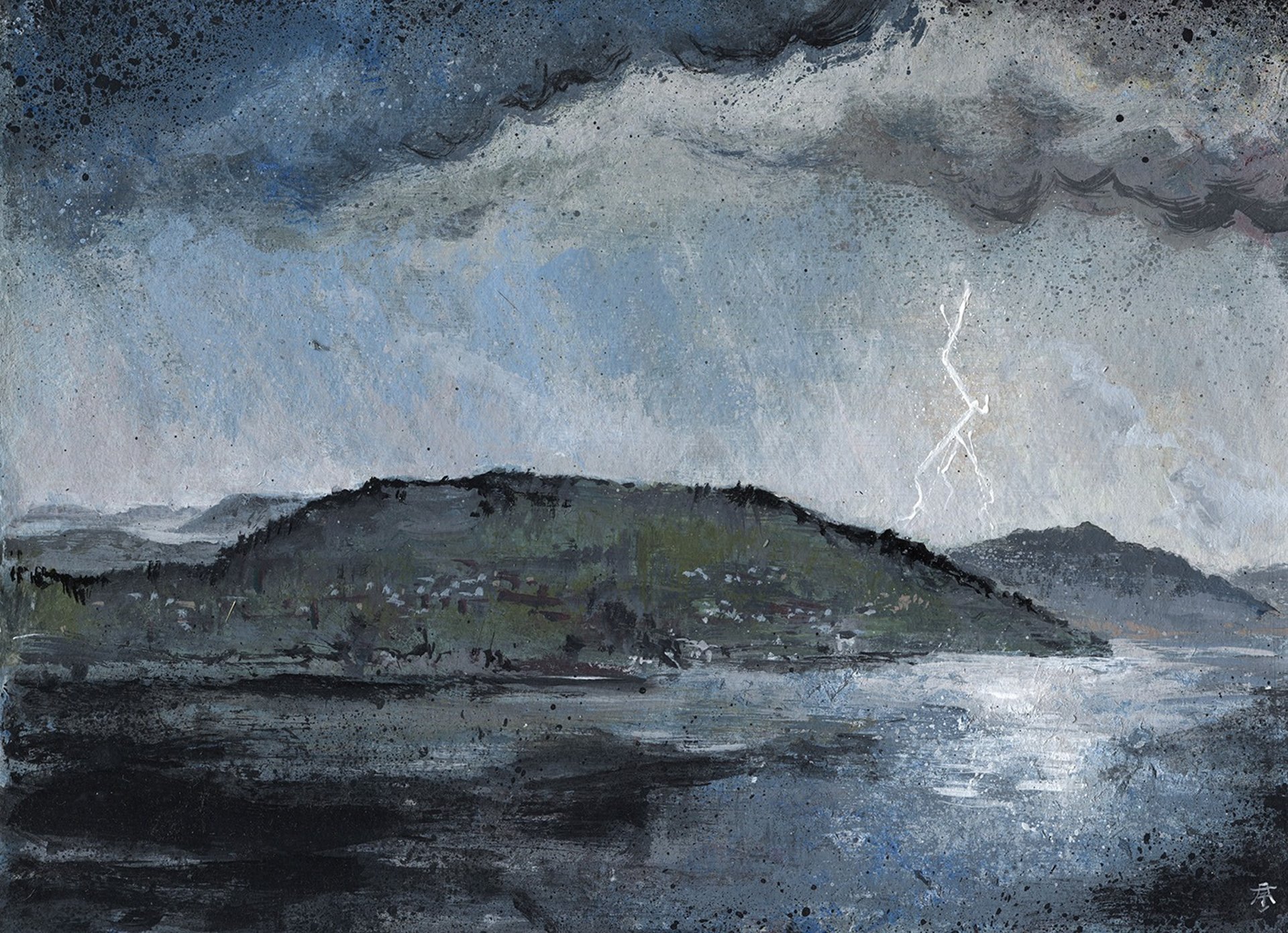
SOIL — Part Three
A maimed knight is rushed into town and Baptiste unveils his blood magic in front of the villagers to save him. When Hromgir and Ithica confront Baptiste, fragments of the Old God's mysterious hold on the Village in the Shins finally come together.
DARK FANTASYSERIAL FICTION
James D. Mills
4/24/202660 min read
THREE
Oft I’ve seen you in the night,
or a wan image of you.
A pale imitation
compared to your brilliance
and bright devotion by day.
Oft my dreams are fraught.
Corrupted echos
of memories long
faded, extinguished.
Long have I languished
in nightmares beset;
they fall upon me,
gnashing, dark creatures
of the long black night.
Though tonight, it shall not be
black demon nor red devil
that plagues ill mine troubled thoughts.
Nay, I see you, my father
as you were in my youth.
And you visit my dreams,
in your arms you carry
another.
A boy with brown hair
that, like his father
and green eyes of Spring...
Those, of his mother.
Ithica (b. 413).
Journaled year 442.
I
Ithica woke before dawn, but she did not venture out of bed. She savored the heat beneath the furs, her husband’s humid musk. She reached out, weaving her fingers between his. Still asleep, his hand was limp and unaware. As she began tracing the musculature of his shoulder, then his collarbone, Hromgir stirred ever so slightly.
Sighing, he squeezed her hand and kept dreaming.
Last night Ithica had dreamt of their child. She oft dreamt of children, particularly those whom she thought to be hers. But this ephemeral child was hers.
He is ours.
Fragmented visions returned to Ithica. Light shined behind her eyelids, as if someone were waving a candle in front of her closed eyes. Peering through leaden-lidded slits, the room remained dark as ever.
She had seen an incandescent sunrise in the spring, painting the weary blue sky with bold golden strokes. Pines and firs rustled in the wind, carrying the sweet scent of nectar, and an angel ascended from below the cliff; ‘twas Da, before illness had withered him to naught but a bag of bones. White wings spread wide, his face was vigorous and wise, deep set and kind, just as she had remembered him. At his side he carried a lamb, just born, still washed in scarlet. On his other he held the tiny hand of a child, barely toddling. A boy, gazing upon Ithica with her own green eyes.
My son... Ithica squeezed Hromgir’s hand. Our son... Da holds his young, bright soul, even now. Ithica blinked and the perfect dark of the early morning fled for the true sunrise. Bridget’s imagery was tranquil, so intentional.
Hromgir groaned and stretched, exhausted by the hunt for young Shelka Morn the night before. She had let him rise and have his morning tea before she ventured to share her vision.
“Mornin’, love...” Hromgir held out his hand in front of him, stretching his fingers. Each one popped and snapped and he did the same with his other hand.
“Good morning,” Ithica said, doing her best not to honey her words, too much. It was just a dream after all. “Seems I’ve overslept some. I should have been outside already.”
“Aye—don’t think anyone will fault ‘ya.” Hromgir swung his legs over the side and rose, continuing his stretches. “Ain’t no one rising early this morn.”
Ithica shamelessly watched the muscles rippling in his hairy back. She had noticed his hunger for her the first time she caught him looking. When he was naught but a stranger on her Da’s property, that had been unsettling. But as he proved himself day by day, faithful and stalwart, demonstrating his iron-clad discipline, his devotion, Ithica began to steal the same, lascivious glances at him. Now, years later, their appetites for one another had yet to be sated.
And that, Ithica mused, is a beautiful thing, indeed.
Her eyes followed him as he walked nude to the kitchen and split a bundle of twigs at once, stacking them into the iron stove as kindling for the smoldering fire that soon followed. He moved to the hearth and did the same, and within minutes, rekindled the coals which warmed their home against the hungering chill.
Hromgir turned round, started toward the wardrobe, then stopped in his tracks, his gaze fixed upon something near the door. “Ithica...”
She tilted her head. “What is it?”
“The pot we set out... something’s grown out of the soil.”
“What?” She launched out of bed, forgetting the fog of sleep and her stirrings. Her feet stung as they collided with the cold, dirt floor, sapping the warmth from her toes. The air nipped at her exposed breasts and stole the breath from her chest.
Picking up the pot, reeking of her own piss, she gazed into the dirt and nonetheless saw thin, fibrous sprouts, green at the tip and white at the base. They were firm to the touch, more akin to pine needles than to grass. Barley... Da, you delivered the soul of my son.
Unbidden tears pooled in the corners of her eyes. Overcome, Ithica dropped the pot shattering upon the ground and collapsed onto her knees. Hromgir knelt beside her, enfolding her in his warmth. Together, naked and exposed to the elements, Ithica felt nothing of the chill outside their walls, nor the covert mistrals leaking through the gaps in the door and the window. Through the moisture in her eyes, she swore she saw a shimmering wall, a sorcerous barrier of light shielding her family—all three of them—from the dangers lurking round every corner, conjured by the love they shared.
“Tell me, Ith,” Hromgir whispered, “what’s happened? Has aught harmed you?”
“Nothing, my love...” Ithica gasped. “Naught has harmed me, not this morning.” She turned her head, took his bearded face into her hands and gazed into his wide, kind eyes.
A moment passed, a heartbeat for each of them.
“Our son lives inside me.”
* * *
“You’re sure you want this place? It’s so... remote.”
Gunhild wore a simple woolen tunic, so long it seemed a gown, her hands modestly adorned, for a nobleman’s wife, with golden rings etched with Katharc runes. Slung around her neck were two amulets hanging on either side of her chest; one was polished iron, the other, tarnished gold.
“Yes, that is exactly why it is perfect for us,” Baptiste said, admiring the northern craftsmanship of his new home.
The disheveled, two storey log cabin was nothing like the towering limestone spires of the Golden City, yet the sweeping designs etched into the beech overhangs belied its apparent brutalism. The house stood at the edge of the village, on a sheer cliff overlooking the sprawl of evergreen sentinels which marched ever southward. The sun had yet to rise, but it would soon paint the cloudless sky—a rare condition in the Shins, and one that he could not help but feel was meant to destroy him and his apprentice.
“That’s good, as it’s the only existing structure in the village that met the requirements you detailed in your letters.” Gunhild withdrew a scroll from the fur bag slung over her shoulder. “Stone hearth, wood stove, second floor, candle fixtures, root cellar, and no windows.”
“We had to do some finagling on a few of those points,” added Torrin. “Ain’t ever met someone who asked me to board up their windows.”
“It is strange, I know, but the arcane arts are nothing but. Sunlight interferes with our research.”
The boy shrugged, his freshly stubbled face turning up with mirth. His mother smacked his arm.
“I apologize for my boys.” Gunhild sighed. “And I don’t just mean my sons. Jukil seemed to have forgotten all his manners the moment King Vebjorn named him byfoged. Don’t matter to him that being posted on the fringes of society is more a sentence than an honor.”
“Are you from Wystra, Gunhild?”
“Aye. My father was one of the king’s men till his ghost met Morgana. Jukil’s father was a jarl who oversaw a few towns, not far from the city.”
Baptiste narrowed his eyes. “So why are you here, and not there?”
“Striders. Why else? The more order the king demands, the more the bastards hem and haw; although, instead of sharp tongues, they use sharp axes.”
He nodded. “I see. Well, glad, I am that there is someone here who knows the way of things. I am delighted by your avid stewardship.”
“It’s something to do, favors my strengths. Do let Jukil know if you require anything else. He’ll see to it that I see to it.”
“I am just relieved to be within my own four...” Baptiste’s eyes flickered back toward the house, then back to Gunhild. “Six walls. Thank you, again.”
Waving off the byfoged’s family, he scurried into shadows of the ever-elusive solitude he had been longing for since arriving to the Shins. Baptiste took in a deep breath of satisfaction as he crossed his own threshold for the first time in nearly a year. The road from Valencia was long, full of dips and detours, danger and drama. But now, he was home—in a proper place wherein he could teach his apprentice to control her primal urges, and harness her gift for the betterment of the world.
That is... if he could find his apprentice. Her absences had been growing more frequent. A dangerous habit, on a cloudless day. Gods, Armelia, I hope you’re indoors...
So too, they had to oust the Ancient polluting the woods. There was still that to contend with.
Now that he had seen the beast in the flesh, Baptiste noticed its shadowed mark on every object, every building... and nearly every woman. The damned spirit was a tomcat in heat, spraying itself on everything and anything. More disturbing was the sway it held even over his mind. Last night’s encounter remained obscure in his mind’s eye. In truth, he could not account for how they managed to escape, not only with young Shelka Morn, but his apprentice, now fully fledged, ascendent. Dangerous.
She drank soul’s blood, the very drug that had stolen away my own sire.
But not even of that could Baptiste be certain. Armelia had remained with Ignar through the night, and despite Baptiste’s pleading, refused to let him examine her over the course of at least a week. And even if she had drunk such a substance, could just one dose manifest those adverse side-effects which had corrupted Guillaume? His moods only began to turn after months of feeding. It was impossible to tell.
His lord had long ago found the Scarlet Chair, which fed soul’s blood into the veins of whomever sat upon it by ways of elder sorcery. Centuries had passed since he last laid eyes upon the tarnished metal from which the Chair was forged; nearly five hundred years ago, Cain the Redeemer plunged his fabled blade into its seat, freeing Dusk from her corruption. Even if Baptiste had laid eyes upon it more recently, he had served only as a steward to Guillaume Sanguine of Monrovia, not as a court wizard. He had not even discovered his knack for sorcery until well after the Empire fell.
Thus, Baptiste was relegated to an act older than time itself: waiting. Now was a time for unwinding from the material tether, and preparing for the life after by passing down his wisdom to a worthy student. Worry as he may, he was beyond proud of his Armelia, his apprentice, his adopted daughter. Impulsive and willful, so too was she kind, willing to charge headfirst through the narrow gate. Her potential, in essence, was limitless.
And so, Baptiste sat in the windowless study on the second floor, reclined in his newly-crafted armchair, and resumed his mirthful jaunt through Byron Martikov’s Encyclopaedia Monstronum. Though it took him an hour or so to finally quell the anxieties churning in his mind, once he did, Baptiste was taken by the late lord’s antiquated, prosaic essays and his misguided, poorly researched conclusions on the nature of the preternatural, laughing his way through the imaginative illustrations and inaccurate specifications.
It was then entirely by accident that Baptiste rediscovered the entry concerning the Ghost of the Mountain. Had he come across the page a few days prior, he would have thought naught of it. Seeing it then, after what happened the night prior... the stamped illustration of a great stag with jagged antlers, illuminated in gold leaf, commanded more attention than he ever thought to grant the foolish Lord Martikov.
* * *
Collin’s head pounded. Though his dreams had long escaped him, he could not shake the sensation of isolation. Not remembering a dream almost made it worse—there was no fiction to rationalize, only the day before him.
The sun had risen high above the clouds. The inn was empty; even the newcomers had gone, likely to their new home. Collin wondered if Jukil had commanded his sons to work through the night to repay Monsieur Fournier for his serendipitous act of heroism in bringing home young Shelka Morn.
All was quiet at Collin’s place, the dark corridors devoid of any sign of life. Not a peep or even a whiff of breakfast from the kitchen. Collin stamped through the corridor, clenching his fists and cursing under his breath, then cursing aloud when he swung open the kitchen door, only to find that the hearth had been allowed to die.
“Ignar!” Collin roared, irritated more by his own sore legs and growling stomach than his ward’s absence. For all Collin knew, the boy might not have even been expected at work that morning. He cared not—he was alone. And that was the only weight on his conscience.
He had thought coming to the Shins would mean maintaining a warm home, surrounded by people who cared for each other, rather than a cold castle surrounded by greedy bastards counting the days until his demise. His inn was far from a castle, but ‘twas just as cold, without warm souls drifting through its venous corridors. Collin had never considered one day there would just be... no one. High Noon, guide me; Morgana, spare me; Bridget, forgive me...
Everything was changing. Folks were coming and going, hither and thither; his boy—er, my ward—was growing out of his meager station in Collin’s kitchen. It had become little more than a chore, with naught of the honor it had bestowed when he was but a newly-minted orphan.
All around Collin, towers rose and crumbled. Yet nothing ever changed, not for him. Have I been cursed? Anger searing his heart, he lit the hearth, then the stove, heating a skillet and melting butter before cracking a few eggs; but as the skillet simmered, so too did his frustrations. Alas, the ambrosiac scent of a fast soon to be broken reached his nose, and reason returned.
You are too passive, mused his conscience. If you love Gerdur, you should bloody say something... don’t just stand here grumblin’ and makin’ your woes everyone else’s problem.
“Bah, you might be right! But who’d want an old lout like me? I’m no hunter nor warrior.”
You’re a good man with a warm home. What widow would refuse you?
“That’s a problem, in and of itself. That’s the whole point of living out here!”
On and on he went, as he oft did, waking alone in an empty inn that had not seen a true customer in the eleven years he had tended it.
Collin flipped his eggs, fried them for a few more seconds, then deposited perfect ivory rounds onto one of Hromgir’s plates. Cutting the yolk, he admired how the golden glow contrasted against the forest glaze of the dish. Somehow, the once-strider had found a peaceful, warm life, after so many years crossing the tundra, treading the sea. Perhaps ‘twas why Collin had a soft spot for Hromgir and his bonnie lass, why he treated them like family since the day they first arrived.
In many ways, Hromgir had done what Collin had: rejected the life he was born into. And one day they’ll get over this slump, and bring to bear a wonderful child... and perhaps I can be something of an uncle... or even a gran’da. Maybe then, I’ll not feel so alone.
But that seemed wishful thinking.
Once, at least, from what Collin had read long ago, these Wystran villages on the fringes had been entirely egalitarian and communal, everyone pitched in something. Since Collin had come, however, it seemed people were more fragmented than ever before, keeping to their own homes, their own fields and livestock. For a few good years he had stimulated the community’s love for ale and mead and warm meals, the need for somewhere safe to spend the night in a drunken stupor after dancing and singing and lovemaking. ‘Twas not long before the novelty wore away, and the people focused again on their work, not even bothering to show up for a complimentary feast during the beginning of a famine. Less than a quarter of the Village showed up the night before to search for a lost child. And that, above all else, had broken something in Collin.
Tired of thinking, Collin broke his fast in silence, staring out the window as the winds shifted and the bright morning darkened with cloudcover.
The front door swung open, permitting the howling gusts to lift the woven nålebound hangings from the wall. Amid the tumult, playful laughter echoed through the halls. He sighed and rose, wiping the yolk from his overgrown stubble with an embroidered handkerchief; one of the few things he’d kept from his old life. Collin peered round a shadowed corner, spying Ignar as he held Armelia by the waist in the open doorway, giggling and whispering their exchange of sweet nothings. Ignar touched a fingertip to the girl’s nose, summoning a slight blush to her fair face, and kissed her upon the forehead. Breaking apart, she bit her lip, pulled Ignar closer by the collar of his coat, and kissed him.
Ignar fell back on his heels, dazed, as if she had hit him across the head with a mace. She disappeared into the blind as another gale tore through the common room, and he waved shyly before shoving the door closed.
Collin crossed his arms and cleared his throat.
“Oh!” Ignar yelped. “I hadn’t seen you, Collin. I’m sorry I’m late... I’ll get started on brunch.”
“I think it’s time, my boy,” Collin said, sitting down at a booth, gesturing for Ignar to do the same. “It’s time I tell ya ‘bout your mother.”
Ignar knitted his brow, still standing. “My mother? I’m not sure I follow.”
“I loved your mother. Very much.”
The boy nodded. “I recall.”
“But she didn’t love me back.”
Ignar looked down at his feet.
“It wasn’t that I was chasing a hopeless notion. Magnolia and I were great friends when you were a lad. My first few years running this place, I spent all my free time with her.”
“Da wasn’t around... not often, at least.”
“Nay, and Magnolia was searching for someone who would be. Thing is: your ma loved you, Ignar, more than anything. So too, did she love the man who had given you to her, despite his foibles. Family meant everything, and I... wasn’t family.”
“I’m not sure why you’re telling me this, Collin.”
“The point,” Collin grunted, not entirely sure, either, “is that even though Magnolia gave me her affections... it didn’t replace what mattered most to her. She could never give me her heart, because her heart belonged to someone else.”
The boy raised his brows, his jaw hanging slack as if to say, “How does this apply to me, old man?”
“Armelia Cordoba and her master come from a place very different from here. Now, I know you’ve no reference for that, but I do. I’ve been among the nobility in a place very akin to their homeland. Their priorities are not the same... I fear Armelia is searching for a distraction against the tumult of her life. Clearly, she’s invested in strange practices and that—”
“Collin.” Ignar barked. “You all but raised me, and I love you for it. But this isn’t your concern. I’m a man grown.”
“Laddie, I’m just trying to... give you a realistic vision of the future.”
Ignar turned, starting toward the kitchen. “Bread and fish for brunch,” he said, not looking back. “And I’m going back out for the market, good?”
Then Collin was alone again, unsure if he should be proud or livid. He settled on neither, and instead fetched the broom and began sweeping the common area, putting a hair too much force into every stroke.
* * *
“You scared the life out m’ bones, Shelka! What in Pan’s name were ye thinking?”
‘Twas the question Shelka Morn’s Ma had been asking her all morning. Ma was wracked with tremors, her eyes red and puffy, her pits reeking of sweat. Empty casks and skins lay strewn about the one room cottage they shared, giving the place the sour musk that always accompanied her Da.
Shelka could only shake her head. She did not know what she was thinking, nor did she understand why everyone was so worked up. She had only left for the night. And what an uneventful night it had been. Some adventure that turned out to be!
“I don’t know, Ma. I think I just lost track of time.”
“Lost track of time? You nearly froze to death. You had half the bloody village looking for ya!”
“I... don’t know what to say. I’m—sorry?”
But Gerdur Morn was not one to take excuses for answers. Nor half-arsed apologies. “I don’t know what to say to you, Shel. Sometimes, I think you want to put me in the ground right next to your father.”
Shelka’s face pinched, as though she had bitten into some tainted fruit; she hated when Ma called her that. She peered down at her fingers, then held out her hands. “Look, Ma. If I were freezing to death, would not my fingers be bitten? I’m okay!”
Ma glared at her, wearing her disgust plain across her face. Shelka did not know what more to say. The woman was unknowable, and that was a disturbing thought. She prided herself on understanding folks, their motivations, what they wanted. Little Jorn wanted to be big—or feel big. The golden twins wanted to be near Jorn and Vander. Vander wanted to be two years older. But adults were so much harder to solve. I don’t think they even know what it is they want. So how am I to grant it?
There was a reason Shelka preferred to live in the woods, why she yearned for the chaos of begging her neighbors for a place to sleep on their floors. Her home was no home, and she had no way of making it one. Not while her Ma darkened the walls. If Da were alive, Shelka thought, feeling a stab of pain in her chest, mayhap, Ma would be happy and we could all live happy. But the chill took Da, just like it takes everyone...
“I’m ashamed to call myself yer mother.” Gerdur Morn’s words slipped in like a knife. But the words did not surprise Shelka; she had felt their piercing bite for as long as she could remember. That did not make their edge any less painful. “I can’t have my own blood worrying the whole town over naught. You know Sergi’s eldest is still missing, Shel! He’s likely blue and stiff by now, and we thought you were the same! It’s shameful. It’s needless. I won’t tolerate it.”
Shelka looked at her feet, curling her thin fingers into fists. “Da would never say such a thing...”
Gerdur’s hand flashed across the girl’s cheek. Shelka stood, shocked, holding her reddened cheek. Then the red washed over her face with burning tears.
“Da loved me! And you don’t! I wish he were here instead of you!” She found herself shouting. Screaming, even. The words tore open her throat, as would a terrible cough that killed young neighbor boys in the dead of Winter.
Gerdur Morn stared at her daughter. First Gerdur’s face was haunted, all the color drained from her. Then she sucked in a sweltering breath, the top left corner of her mouth curling with rancor. She bent down and grabbed Da’s leather belt from the middle shelf, below the tabletop, the leather skidding against the dried wood. Unfurling the belt, the swinging length slapped against her strong forearms.
Fermented tingling spread across Shelka’s chest and dripped into her feet. She fixed her gaze on the glint of sheathed silver atop the table, picturing a pile of cleaned fish and remembering how easily their flesh parted from bone with the intervention of a sharp blade.
“Your father was a shit of a man. He didn’t care one bit for you. Or me. Bend over, Shelka.”
Those black words pulled Shelka from her reverie. No—pushed her out of it, as if she were standing on a coastal cliff, and was plummeting down toward jagged rocks, each one wrapped, battered, cracked leather. “Ma...”
“Now!” Gerdur’s roar rattled Shelka’s ears, rattled the glass panes enclosing the windows.
Her courage seeping out, Shelka turned round and sank onto the table, grasping the edges opposite. The cold silver hilt of her Da’s fish knife pressed into her cheek. A crack of leather. She lurched forward, squeezing shut her face so she did not cry out. The wood bit into her abdomen, into the palms of her hands.
Another crack, then another.
II
’Serve me, and the girl shall live.’
That was what the Old God swore when first we met. ‘Twas the reward I was promised in exchange for my eternal servitude. Lingering by Snorri’s pond, still haunted by his restless spirit, I knelt in the fresh-fallen snow, reveling as the chill bit my knees. The longer this all went on, the more I worried that I had been deceived.
I learned quick not to ask questions. The rewards for my discretion were vast. But now, my head was a storm of questions, and I feared they came with answers I ought not hear.
The pond’s surface had frozen to perfect glass, but the bass still swam deep below where the water was still warm; it teemed with life ever since I allowed the Sticks to devour Snorri Morn. He and I were the only ones who cared to fish. The younger generation preferred venison and boar over the meager bounties provided by the scant bodies scattered about the Shins. Fishing was always better down the mountain, on the raging streams and the deep lakes. ‘Twas why I spent so much time there.
Even six winters after his demise, Snorri Morn remained my only company. Thankfully, he’d little to say, stripped of his Hamingja and his Fylgja, his luck and his guidance—and everything else that makes a man a man. The guardian spirits lose patience with drunks; the drink poisons our connection to them, deafens us to their ethereal words. Snorri’s Hamingja left him the night he died, the moment she saw me making my way for him, axe in hand. After Snorri’s death, his Fylgja went off into the Great Beyond, and surely she had urged his stubborn ghost to follow—but Snorri Morn was no man who’d be commanded by a woman, even the guardian spirit who had chosen him at birth.
I felt his spectral resentment branded across my back. He oft lingered by the trees, watching from afar, too afraid to confront me. In my service to a force greater than my own wants, I have far surpassed my old friend. I could banish him with ease, send him to that dark place within Pan which all we Wystran soldiers fear most. The place we go when our bodies rot unburned. Morgana hast no mercy for such wicked, rat bastards. Bridget shall not even spare us a second glance.
Sometimes I fear for what’s to come, when mine own Hamingja runs out on me. I’ve not aged a day since that night I pleaded for the Sticks to save young Shelka Morn, but as far I am aware, I am still but a man.
What now might Bridget think of me? Does the Great Mother Birth look with favor upon the harvester of children, the spirits of unborn babes, in service to an Ancient that should have perished long ago? Surely, she is ashamed; and when her dark sister finally claims my wicked soul, surely I am more deserving of eternity with Pan than Snorri Morn.
Tenfold, I’d wager.
What began as saving one child, has descended into sacrificing countless others. The Sticks hoards his plunder, gathers his strength, summoning the clouds and the winds and the storms to keep civilization at bay, and to chase out those who choose to endure.
For what ends do we preserve this place? Is Nature alone worth all we’ve paid?
My mind circled back to the question that plagues me most: Why have we stolen so many spirits in the guardianship of Shelka Morn? For so long, I left this question unasked, satisfied simply to see her spared the hoary fate of the pond’s depths. But now that our presence is known by the girl and the outsiders—Ancients themselves, no less—toward what end does my master play, and to what black fate have I resigned myself and that of Shelka Morn?
I rose, easily finding my footing. Before I knew the Old God, I shuddered and ached with every movement. Now I moved with the ease of a man young enough to be my grandchild. Freed of my sword arm, I’ve never missed it once. Even as the Sticks wanes in his power over the land, I may never notice. For even the power of a dying, starving god, is more power than any man should be trusted with.
Troubled, I started down a familiar path to visit my only living friend. The only one who, until last night, knew that I still lived. The Old God preferred that I remain in isolation, and I knew his disapproval, for my path did not bend itself to my destination. But neither did my path cause hindrance. For all my time as a servant, I’ve never been a slave. My master will offer his unsolicited counsel, thrust his reasoning, but the choices presented to me have always been mine own.
She was inside her hut when I stopped before her salt line. I waited, for time did not matter, and she noticed my arrival before the sun reached its zenith, before the Sisters’ holy Brother reclaimed the throne of day. Hama took her time to greet me, sauntering through her flower garden, bending down to sniff her wilting marigolds, somehow clinging to life despite the fast approach of the Solstice and the sparkles of snow dusting them.
When finally Hama attended to me, I was overcome by her grace. She was a verse, long and storied but unfinished and unspoken. Old as I am, or within a few seasons, but her face begot the vigor of a being who’d only just started existing. I know not the fate of the spirit after death—at least, for those not enthralled by the Old God. Perhaps, I am merely still so young in the grand scheme of things. I like to think she had lived many lives before this one, but not yet enough to punctuate her final line.
“Been a long time since you came round,” Hama said, opening her gate, inviting me to cross into her demesne with a wave of her hand. “We should talk.”
I entered, leaving the realm of my master. “Aye.”
We sat upon the old rocking chairs on her stoop. I remember the man who’d made them. Remembered too, his funeral pyre, fueled by the creations he’d left unfinished when sickness claimed him.
Hama removed her gloves and knitted her bare fingers, with runes burned into her nails and displayed prominently in what appeared to be an intentional sequence. A message perhaps?
“I’ve told Ithica of your master,” she said, unworried and unapologetic. “I told no more, other than that he exists. But I shall not lie on your behalf any longer.”
“We cannot outrun dishonesty.”
“Nay. At first, I admit, I sympathized with your patron’s plight. But I’ve seen the fruits of his labor, and now I believe he works for his own ends, with no regard for the people under his care.”
I shrugged. “The Old God has his reasons.”
“I no longer trust to his reason. Neither should you. I shall tell others, as circumstances demand. I’ll sow the seeds, and let the people reap their own understanding.”
“I fear our friendship must now come to an end.” I rose, keeping my face like stone, though my heart seemed woven of gossamer, tearing at the seams. “Thank you for the warning.”
“Would you hear your fate, Odhun? Before you march back into the service of a deceiver?”
She stole the wind right from my lungs, dead sails on a still sea. I had almost forgotten my given name. “What kind of question is that?”
“You approach a crossroads. Once trod, you can never turn back. Where they lead is obscured from me, but the choice is clear—choose your people, or your vigor. You cannot have both.”
“Aye.” I breathed deep. The air smelled bitter. “Live well, Hama.”
I left her then, crossing over her salt line and, without another thought, disappeared into the shadows of the woods. To think is to look back. And looking back meant you should have never walked forward, in the first.
* * *
Ithica and Hromgir were late to Gjafadagr, the day of grace. By the time their weary horse lugged their wagon to the square, the Mourning Sun was just beginning to give way to the High Noon, obscured by roiling gray clouds. Thunder grumbled in the distance, and sleet poured somewhere lower down the mountain.
They claimed their usual stall, between the weary hunters, Kartha and Bjorn. The blacksmith, Hod, kept his smithy in the square. He stoked the smoldering coals in the forge, his heavy face ashen, barren of thought. His wife, Sergi, sat on the ground beneath an overhang, her twin golden-headed girls held to her breast.
Sergi seemed more ghost than woman, her own golden tresses had gone bone white at the root, her pretty face veiled with fog. She was of an age with Ithica, and though whispers of her youth lingered in her features, the haunted shade over her eyes seemed the mark of a parasite, leeching years from the very essence of her spirit.
The market itself was a rather dull affair. In the summer, the square would be filled with a throng of eager villagers, the scree of bairns playing in piles of hay and battling atop at the mounds of manure. Today, they shambled from stall to stall, lifeless eyes straining over the vendors’ selections as they failed to recall what goods they needed to bring home.
High Noon hung low in the hazy sky, its bulbous silhouette pale behind the clouds. The sun hovered above the blackened ruin of Father John’s chapel. Once, the bell tower had been so tall that the sun never touched the square. Now, the scorched bell, coated with soot, sat lopsided in a heap of ash and charred logs.
Ithica arranged a bed of produce and jarred poultices. Hromgir displayed his newest dishes so that the noon’s witchlight scintillated upon the intricate glazed patterns. And the day wore on; folk emerged from their homes and traded and bartered, reluctantly offering services and goods in exchange for others. Coin was outlawed on Gjafadagr. The only currency that mattered was goodwill. This tradition, one of the few that had yet to die away, was what kept the Village in the Shins alive. Kept people fed, children under watchful eyes, and cabins in good repair.
“Don’t tell me you’re having trouble growing, Miss Ithica!” Kartha called, wandering over to claim his pickings ahead of the crowd. “If yer garden fails—we may well starve.”
“There was a mishap, but nothing that cannae be fixed.” Ithica picked out a handful of potatoes, an onion, and a head of garlic, plopping them in Kartha’s outstretched basket. “Just a bit less this week, is all. Make some bone broth—it’ll go farther.”
Kartha kitted his overgrown brows, staring at his meager claim. “You expect me and Bjorn to live off this?”
Ain’t much else to live on...
“It’s the fair share. Take it or leave it.”
“Fine! But don’t come wailing when I give you a tough cut.” He looked over to Hromgir, who was staring off at the trees. No one had yet come looking for dishes or pots. “Aye—strider! Thanks for coming out with us. Ain’t many willing to charge into a cold night these days.”
Hromgir nodded. “Good tracking, my brother.”
The hunter smirked, gazing down regretfully at his too-light basket and returned to his stall, already hollering obscenities at an old man hassling his brother.
It was not long before more people came round looking for their share, echoing Kartha’s misgivings. In season’s past, what Ithica contributed would have been seen as more than generous. Now that she was the only gardener yielding anything of note, her neighbors had grown suddenly suspicious, as if she had withheld a portion of the week’s harvest to add to a hidden hoard. But mistrust did not stop them from claiming their shares. Ithica was depleted of all her goods within the hour. Everyone, after all, needs to eat. With the last of the crowd less than satisfied, Ithica leaned back in her chair and sighed her relief.
Hromgir boasted his latest creations, attempting to upsell his only regular taker. At least once a month, Collin claimed a matching set for the inn’s collection in exchange for a small barrel of ale. From the rare few who’d filter in, Hromgir only took broken potsherds in exchange for newly made replacements. Sometimes he took on requests, such as the sumptuous wash basin that Helgi had requested a fortnight passed.
Ithica shivered; the damned thing with all its elaborate, sweeping curves still stood by the edge of the stall. It was only a matter of time before Helgi came round to claim it. And that might be the perfect time to go for a stroll. She feigned stretching, raising her arms over head, twisting her back to get a wide, covert view of her surroundings. Helgi was badgering one of the carpenters across the way—I suppose she needs something to hold her free washbasin.
Then something drew Ithica’s eye. Ignar and Armelia walked on the outskirts of the market, laughing and smiling, their pale faces flushed, their fingers... interlaced. Ithica swelled with pride on the boy’s behalf. Young love was a rarity in the Shins. Rather, genuine love. Or love at all. There were few folks to go round, and if you did marry, it was likely because you were already married before you arrived.
Men like Kartha and Bjorn, strong, able-bodied, with at least half their wits about them, would have had no trouble finding a woman in a bigger town, or even a similar village further south. But on the fringes of the Wystran province, in the reaches of Withershins, the coldest range in the Great North, there were simply not enough women for every man who wandered in.
And even of those who had found a mate, only a scant few sired children that lived long enough to earn a name. Another shiver rolled up her spine, draping tingling tremors across her shoulders. Poor Helgi had been through that five times... Could I face such hardship?
“Where’s your husband, Ithica?” Helgi said, who suddenly stood over her, thick arms mounted upon her ample hips.
Ithica jumped, her heart sinking to the floor. It was as if her very thoughts somehow summoned the wretched woman. She looked round desperately—Hromgir had gone off to speak with Hod, coercing the grieving man to take a lavender-swirled bowl he had just finished a few days ago. He never did learn how to choose his moments.
“I am perfectly capable of handing you the wash basin, Helgi.” Ithica sighed, made an effort to look her old friend in the eyes, but found proper eye contact impossible. Helgi was half a head taller, staring at the top of Ithica’s crown. “Don’t need to grab my man for every favor you need.”
Helgi chuffed, plumes of fog puffing out her nostrils like dragon’s breath. “Is that what you think? No wonder you won’t speak to me.”
“I won’t speak to you? Helgi, please.”
Helgi had opened her mouth to retort, when she was interrupted by a rumbling tumult. She turned, and Ithica looked over her shoulder, standing on her tip toes. A raving pack of dogs pulling a sled charged into town, their driver hollering harsh commands. He skidded to a halt in the center of the market, the townsfolk closing in on him to see what all the ruckus was about.
“Help us!” The musher jumped off the sled. “He’s dying!”
Ithica and Helgi inched closer until she saw the unconscious knight slumped in the bed of the sled. His face was gaunt, devoid of color. His Kuzo-styled armor was rusted with splatters of crimson gathered round a monstrous bite taken out of his collar.
“Kartha!” Ithica flung her head back and screamed: “Run! Summon Hama!”
The hunter did not balk but bounded into the woods.
* * *
Baptiste had not made much progress in his research when the din came clamoring up the hill toward his house. He had already put on his boots, and was donning his cloak when Armelia, and the boy she had taken a liking to, crashed through the front door.
“Baps! You need to come to Collin’s—a man is hurt!”
“Let us waste no time,” Baptiste said, though he hesitated at the threshold, staring out into the muted light of day. One wrong step. He wished not to remain where he was; certainly, reading about this Ghost in the Mountain was more pertinent. Yet he had committed to this derelict community. One look in his young apprentice’s crimson eyes, so invigorated with compassion and drive, drained all his reluctance.
A significant measure of restraint was required to run at a mortal’s pace, despite possessing the capability to travel much more swiftly. The boy was fit and swift, but even his full stride could not match Baptiste’s lazy jog, and Baptiste would have been considered slow among his ilk.
They barreled through Collin’s front door soon enough. Ithica and her husband, Collin, and the blonde woman Baptiste had seen with the search party, were gathered round a table, upon which lay a writhing, bleeding man in plate armor. A thin Wystran man hovered about the table, face drenched in a sickly sweat, his eyes sunken and bruised.
Armelia halted in the mudroom, her eyes wide and fixed on the dying knight. Ignar stopped and regarded her with concern, mistaking her hunger for the shock of a delicate maiden.
“Apprentice,” Baptiste snapped, not unkindly. Armelia’s eyes flashed briefly to him, then back to the object of her overwhelming desire. “Stay outside. You cannot come in here, understand?”
A torrent of emotions cascaded over her face. Frustration shifted to confusion, then to solemn acceptance.
At last, she nodded. “I understand.”
“Good. Go home if you must.” Baptiste turned to Ignar, who was poised to argue on her behalf. “Understand, good man, her mother only recently passed. She need not see this.” It sickened him to use Sylvia’s memory for such underhanded tactics, but to protect his daughter, Baptiste would break every convention of propriety.
“Oh,” the boy said. “Aye.”
“What happened?” Baptiste called to the room, removing his gloves. “Who is...” his words cracked against stone as he laid eyes on the wounded knight. He did not recognize the man, but the insignia embossed on his breastplate, and the shape of the golden broach upon his cloak. ‘Twas the very same that the late Byron Martikov had etched into the leathern cover of his Encyclopaedia. This is a knight of the Black House... Our passing through Wystra had not gone unnoticed, after all.
“He’s been attacked! By a great bloody wolf—I saw it, with m’ own eyes!” the Wystran stranger said. His dark eyes were bloodshot. Sweat pooled upon his thick brows, and rilled down his face into his wispy black beard.
“We’ve sent for the Elder, but she’s a ways out. Is there aught you can do, Monsieur Fournier?” Ithica gripped her husband’s hand, who refused to look into Baptiste’s eyes.
“Yes—Great Mother willing, I can stop the bleeding. Everyone, stand back!”
“Thank the gods for wizards...” Collin whispered from a shadowed corner.
The crowd eased back, granting Baptiste ample space. He spread out his arms and uttered an esoteric phrase to channel potential, sapping it from the air, the smoldering hearth, the green trees beyond the walls... and from the knight’s own blood, spilling out upon the table. In his dead, native tongue, Baptiste chanted: “Great Mother Death, show mercy upon this soul. Grant your power, that this life might be spared, that he may return unto you another night, when he is whole. When he is worthy. Great Mother, I beseech you, grant me your power!”
The tallow candles and lanterns flickered at once in their sconces. The building’s timber frame groaned. Winds gathered and howled over the roof. Raw, divine power coursed through Baptiste’s veins, straining the meager muscles in his arms, as if lifting more weight than a man of his stature was ever meant to carry. Spectral wisps danced in his palms, flashing pale pink of the Dark Art.
Baptiste grimaced, and laced the sorcery into the man’s wounds. All went still and silent. Did the Goddess pay heed to my plea? Then there was a suppurating squelch. Baptiste smiled as the knight’s muscles and flesh stitched themselves back together beneath his touch.
III
What Ithica witnessed was nothing short of a miracle. Of course, she had heard of seidr and its practitioners. But she had never thought to see it firsthand. Clutching Hromgir’s hand, Ithica stared at the stranger as he uttered his strange words, wielded his esoteric power. His incantation darkened the room, as if commanding the very skies to bend to its manifestation.
Once Baptiste’s hands touched the knight’s flesh, light returned to the land, the candles flickering as if nothing had happened at all. Baptiste moaned, his whole body rattling, and he fell to his knees. No one dared to spare him the fall. Tension clotted the chamber as everyone awaited the results of the dark magic they had witnessed.
The knight groaned, groping at air. A collective sigh exhausted from all in attendance.
“Musher... Musher? Where be you?”
The dog sledder removed his cap and approached the table. “You’re safe, milord! Just as promised! I told you: I see my passengers to safety...”
The knight choked on his own laughter. “What happened?” His voice was gravelled stone eroded over eons.
“I cannae be sure, milord.”
“You were gravely injured, my lord.” Collin emerged from his corner, offering a hand and pulling the knight to a sitting position. “If not for your servant, you’d have perished in the wilds. Lucky for you, we have a wizard in our midst—it seems his sorcery saved your life.”
“Wizard?” the knight said, as if the word tasted like shit on his tongue. “I know of no wizard—” he fell silent when he saw Baptiste, standing tall, his hands resting behind his back. Recognition sparkled in the knight’s dark umber eyes. “I see. Explain your conjuring, master wizard. Am I healed?” He spoke slowly, the conversation morphing into a transaction.
“No sir,” Baptiste said. “Simply alive. A medicine woman is on her way. She will see to it that your wounds are properly cared for.”
“And how is my savior named?”
“Of course.” Baptiste bowed low. “Monsieur Baptiste Fournier of Valencia. I am glad to be of assistance.” He rose, breathed deep, and said, “And you are of the Martikov Black House, if I am not mistaken.”
“You speak true. I am called Syr Edmund Martikov, heir to my elder brother and patriarch, Edgar Martikov.”
Collin, Helgi, and Ignar all bowed when they heard his name. Hromgir remained upright, and Ithica followed his example. His hand was growing hot in hers, beginning to sweat.
“It is an honor to host such an esteemed guest, my lord,” Collin said. “But I will send for the king’s man, Byfoged Jukil—he will want to speak with you. Besides, he will have more appropriate accommodations for one such as yourself.”
“Agreed. Until then,” Syr Martikov grimaced as he forced himself to his feet, “I must doff my armor. Show me your finest room. Teach my musher how to untie the laces. My squire remains in Castle Morose.”
“Aye, my lord. Right this way.” Collin gestured to a corridor and led the knight deeper into the inn, the reluctant dog sledder in tow.
The rest of them stood in silence for a time. ‘Twas not every day bleeding lords came thundering into the Shins. Helgi glanced at Ithica, but quickly looked away when Ithica met her gaze. Ignar looked first to Baptiste for instructions, then to Hromgir.
Ithica’s husband had said nothing, indicative of his mounting fury. My man is slow to anger. What’s happened? So too was there a slight tremor in his hand, as if he were anticipating violence, or perhaps thirsting for it.
“Ignar, please check on my apprentice,” Baptiste said. “I am sure she would value your comfort.”
“Aye, sir.” Ignar nodded and ran out the door.
Baptiste looked to Ithica and Hromgir. “Miss Ithica, if I may,” he began. Hromgir tightened his grip round Ithica’s hand. “There is a matter of utmost importance I must discuss with you—in private.”
Helgi scoffed and followed Ignar out the door.
“Mister Hromgir, if I may have a moment with your wife.”
“Nay,” her husband growled. “You shan’t.”
“My husband and I share all, Monsieur Fournier. Speak to us both, or not at all.”
The newcomer was unaffected by their insistence, his pallid face unreadable aside from the fatigue that had clearly claimed him after calling upon his seidr. “Very well. I wish to apologize for my behavior the other night. I treated you most ungraciously.”
“Aye.” Ithica nodded.
“I wish to explain why.”
Hromgir opened his mouth, but said nothing.
Baptiste cleared his throat. “As a practitioner of sorcery, I am privy to all manner of uncanny happenings. When first we met, I saw, felt, a shadow attached to you. The mark of an Ancient. I had mistaken you for a being of substantial and dangerous power, and I feared for the safety of myself, and that of my apprentice. I have since learned the nature of this shadow, and I know now that you are no threat but a victim. There is an entity that dwells in these woods, who haunts the Guardians. It has placed its mark upon you, as it has done throughout the village.”
Ithica’s breath hitched. Hromgir’s grip softened.
“This is not the first you have heard of this.”
“No...” Ithica admitted. “Elder Hama told me something akin to what you’re saying.”
“Why should I entrust my wife’s fate to you, stranger?” Hromgir said, his sonorous voice whetted with a keen edge.
“I wish to help. If I am to make this place a home for my daughter, I must see to its safety. And as a practitioner of sorcery, it is my utmost responsibility to attend to such matters.”
“You lied about what happened with Shelka Morn last night.”
Ithica stared at her husband. “What?” She looked back to Baptiste. “Tell us what happened to Shelka Morn—or I shan’t listen to another word out your mouth.”
“Very well.” Baptiste flattened his thin lips. “She met with the entity of which I speak. Armelia and I went searching for her on our own, and found her in its dwelling. We survived a direct encounter and brought the girl home. I cannot say more...” he looked over their shoulders down the corridor Collin and the knight had gone, “not while the entity’s hex distorts my recollection of the specifics, but more importantly, not while our guest is present.”
“You know him,” Ithica said. She felt more ill with every word the stranger spoke. “Don’t try to deny it. I saw the recognition in yer face the moment you laid eyes upon him.”
“I do not know him personally,” Baptiste admitted. “But his house is familiar with me—and what I represent.”
“And what is it,” Hromgir whispered, sucking in a sweltering breath through his nose, “that you represent, eh? What are you truly about? I ken ye’re no seidrmadr, not like the ones from the City across the Black Sea—I’ve seen that power. Ye called upon blood.” He spat the last word, as if it were the vilest of curses.
“I will explain all there is to know,” Baptiste said. “But not whilst the walls have ears. May I join you in your home?”
“I don’t think I want you in my home...” Ithica murmured.
“I give you my oath. I mean you, nor this community, no harm. My nature is perturbing, yes, but my intentions are pure.”
Ithica spat a laugh. She was ready to report the damned stranger to the byfoged. He seemed entirely strange and unpredictable, and his actions thus far had only proven one point: that this Baptiste Fournier was not worthy of trust, that he was dangerous.
But her husband had calmed. “Oaths mean something, stranger. Yer soul be damned if you break it—and I’ll send ye to Morgana with mine own axe.”
“Agreed. Should I betray your trust, I will gladly present you my neck.”
Hromgir drew his knife from his belt. Slashed his palm. “A blood oath, then. You swear to protect us—Ithica and the child she carries, and that of our neighbors?” He offered the blade to the wizard.
“I swear it,” Baptiste said, taking the knife, conviction written upon his face as he drew the edge over his palm, “by the blood we now share.”
The men clasped hands.
Ithica was not sure what to make of it, but she trusted her husband more than she trusted the sun to rise in the morn. After what Hama had told her, nothing seemed certain... aside from the man she had chosen to live the rest of her life with, the man whom she knew would stop at nothing to see them safe.
“Join us on our wagon, friend,” Hromgir said, wiping his bleeding hand on his trousers, “and tell us all you can.”
* * *
“If it’s all the same to you, my lord,” Collin said, once Syr Edmund Martikov freed himself of his ravaged breast plate and pauldrons, “I must see to my other guests. I trust your servant now understands the fundamentals of removing armor.”
Scowling, the knight narrowed his eyes. Whether from the pain or if that was just his usual expression, Collin did not know the man well enough to say. Just when it seemed the lord knight would not acquiesce, he nodded.
“Summon me if you require anything else.” Collin turned to leave.
“Wait.”
Collin stopped, cringing under the weight of a lord’s expectations. This is the very thing I sought to escape... “Yes, my lord?”
“The man who saved me. Baptiste Fournier.”
“What of him, my lord?”
“Watch him. He is not as he seems.”
Collin turned round, met the knight’s gaze. Everything about Edmund Martikov’s face was solid as a rock. His mouth, flat. His brow, flat. His eyes, dull, hard... unwavering. Nothing he presented was an accident. Everything he said and did furthered some unseen end. What that end was... Well that remains to be seen. Though, now I may have some measure of what it might be.
“Aye, my lord. I will do as you say.”
“Good.”
Collin hurried out before more demands could be made of him. The one he had been given was troubling enough! He had half a mind to simply disregard the knight’s words, but then he heard the hushed voices in the common room: Monsieur Fournier’s odd request to speak with Miss Ithica in private. Collin stood around the corner, in the shadows of the corridor. His stomach churned as he learned that Shelka Morn had encountered some otherworldly entity; that Baptiste had, just moments ago, channeled blood magic under Collin’s own roof.
Most disturbing was Hromgir’s sudden conviction, and that after he had expressed such intense distrust just the night before. By the Gods... Collin thought. He’s cast a charm on them!
Once the front door swung open and clicked shut again, Collin donned his hood, cloak, and mittens, and escaped out the back. He was loath to act as the pawn of an entitled noble prick. So too, was he loath to allow his dear friends to be preyed upon by a practitioner of black magic.
* * *
Garland Musher excused himself once the medicine woman arrived to treat Syr Martikov’s wounds. Garland wasn’t no bloody servant, nor was he a squire. And he needed to tend to his dogs. He had expected half of them to drop dead after they pulled all through the night and into the morning. Gods help me—I should have left the bloody bastard to bleed. But ‘twas not what he did, and now he was stuck in a backwoods hellhole at the edge of the world, ensnared by the will of the most entitled, stick-up-his-arse shit he had ever had the displeasure of working for. Sure, the lord knight had paid him well. But pay did not replace one’s own bed. Nor did it assuage the broken obligations in the coming days. In Wystra, broken words can break a man’s reputation, his livelihood, overnight.
When Garland arrived at the stable where he had left his dogs, the groom did not deign to look at him, or even say anything. It was silent inside, which was strange. His Hati always barked for him whenever he returned.
“What’s happened with my pups, eh?”
The groom held his mouth flat as if sworn to silence. He was an old, scrawny git—’twas a wonder how he still lived at all in that damned cold. He shook his head.
“You fed and watered ‘em, did you not?”
“Aye.” The word was rough, as if chiseled from coarse stone. “Provisions only do so much. You surely know.”
Garland shoved passed the old man, charging into the creaking stable, its rotten frame groaning beneath the pile of snow on the roof. The whole place stank of shite and mildew. The dogs were split between three bays. The two nearest the bay door held all his young malamutes and huskies, laying on their bellies and panting, tongues lolling. At first, he had thought all was well... but his sweet Hati still had not barked for him.
Hati lay on her side, motionless in the third stall. Gallo, her youngest pup, sat on his haunches next to her, ears sagging. Garland fell to his knees, his face burning as he touched the cold paw of his oldest companion.
“No... Damn it all, no!”
He was breathless. Of course, he had lost a dozen dogs and just as many bitches. ‘Twas part of the trade. But my dear Hati... you’d outlived them all, hadn’t you? Garland looked round, ensuring no one would witness his sorrow. He wanted to weep, Hati deserved as much, but then he saw that damnable lord knight lingering at the threshold of the stable, watching on with his cold, callous stare.
Syr Edmund Martikov entered the stable once they met eyes.
“Y—you get taken care of?” Garland stammered, fighting to keep it all inside.
“Yes.” Syr Martikov peered over Garland’s shoulder. “You liked that one.”
He nodded, wiped his nose. “Aye, sir. Aye.”
“I am sorry that she had to die. I will pay you well.”
“Ain’t no amount of coin, sir. Hati was singular.”
“I understand.” The knight’s face bore none of the token embellishments worn by the nobility, none of the dishonesty, nor the pandering. He seemed to truly understand... Those dark eyes had seen loss. “Come. The byfoged invited us to dine. Good food and wine will ease your mind,” he paused, gazing down at the dog, then back to Garland. “We will build a pyre before the night’s end. She died as a warrior should—so should she be sent to Morgana.”
Garland nodded, wiping his nose on his sleeve. “Aye, sir.”
Rest well, my sweet girl.
The byfoged lived in a new-built longhouse, down the road from the inn, straddling the edge of a cliff. A stern-faced woman opened the door, whom Garland took to be the byfoged’s wife—even those in power over such a remote, struggling village could not hope to afford servants—and led them to the dining room. The spread upon the long table was mighty sumptuous to one such as Garland, who was thankful to find a pint of grog and a bowl of porridge awaiting him each night at home; Bridget be praised for his bonnie wife. Among grilled leeks, onions, and beautifully shaped loaves of sourdough, there was also a leg of goat and an entire roasted chicken, smothered in a garlic mash. Despite the musher’s delight, the lord knight said naught of it. He sat at the head of the table in silence. Whether it be women Syr Martikov refused to converse with, or simply someone too poor to provide an entire hog and a bottle of Valentine wine, was beyond his ken.
It may well have been both.
The stern woman, obviously accustomed to dealing with difficult men, left without ceremony or reverence for the man of high station to whom she was host, and returned some time later with her husband and their three sons, all of which looked like identical, if not progressively smaller, copies of their father. The byfoged introduced himself and presented his sons—not his wife—to the lord knight. He did not acknowledge the musher.
Sitting at the tail of the table, Byfoged Jukil was flanked by his wife on his right hand and his eldest son, Garrick, on his left. “I’m glad, my lord, that no serious harm has come of you. It seems you may have perished if not for the intervention of our newly arrived wizard. What happened on the road?”
“True. I saw the Great Mother’s holy bridge, and the gray grasses of the Silver Valley awaiting me upon the other side. I was mauled, you see. If not for my musher, of course, I would have perished.”
The byfoged squinted. “Mauled, you say? I ain’t seen a snow bear in these parts since I was a lad.”
“No bear,” Syr Martikov grunted. “A black wolf, three times my span and a head taller.”
“A giant black wolf, eh?” The byfoged looked to his wife. “Have ye heard tell of any such beast?”
“Nothing but rumors and local superstitions. Some say there’s a strider clan of skin-changers, further up in the peaks.” Gunhild looked at the knight. “But those are naught but tales, my lord.”
Garland swallowed. He had encountered the Fenris Clan many times in his long years running dogs on the trails. They bred most of his dogs. He, too, had heard tell that they could change shape by moonlight—but in all his time among them, he had never witnessed anything of the sort.
“That matters not,” Syr Martikov said, planting his elbows on the table and lacing his fingers, his plate untouched. “Nor is it the cause of my being here.”
“Why have ye come, my lord?” asked the byfoged. “Please, enlighten me as to how I may assist.”
“I hunt a fearsome foe. Are you familiar with the Black House, byfoged, with our task?”
“Aye, sir. How could I not?”
The lord knight raised his brow.
“Well,” the byfoged went on, clearing his throat. “You’re the king’s man.”
“The Black House, darling,” his wife said with much disdain, “is King Vebjorn’s method of keeping the peace throughout the Wyse. Your women are adept in weaving Shadow Sorcery, and your men are sworn defenders of the natural world.”
“So,” Garrick said, his eyes alight with misguided confidence, “Syr Martikov keeps foresters out of the kingswood?”
Gunhild rolled her eyes, shaking her head. “Not that natural world, love.”
“We defend the realm of the living,” Syr Martikov said, “from the forces of evil who wish to prey upon them. Most times, we hunt down striders, burn down their villages. More rarely, it means drawing a blade against less tangible threats.”
The byfoged looked as if he had been slapped. “Are there striders in my village, sir?”
“Something worse. Your new arrivals: I have been monitoring the letters they sent, and I observed them as they passed through Wystra. And here have I followed them.”
“You mean Baptiste Fournier?”
“Yes.”
“Whatever for? Did he not save your life this morning?”
“He did, but that is unimportant. He is my charge. Baptiste Fournier is a devil, a soulless creature that devours blood. He has deceived you and means your people harm. I shall bring him to justice.”
Forks clattered on the table and all went quiet.
“That can’t be...” Jukil said, staring at the wall. “He saved a missing girl, just last night.”
The lord knight tilted down his chin, knitting his brows. “How did the girl go missing?”
“I know not.”
“He rarely comes out by light of day, no? Strange eating habits, or perhaps, you have never seen him eat?”
“Gods! Yes, you’re right on!”
“Jukil...” his wife placed a hand atop his. “Remember the man is a wizard. Wizards are wont to do strange things.”
“And what of his apprentice? Do you think her a monster, too?”
“It is possible.” Syr Martikov shrugged. “I have never heard her name—Armelia Cordoba, no? Very good. It may be that she is but a thrall under Fournier’s control.” He sighed, cracked his neck. “I have known of Baptiste Fournier for some time. The name appears throughout historical texts, predating even the Old Empire. When a blood-drinker renews its original name, it is in the interest of creating a haunt for the rest of its days. You say this girl is his apprentice? She might well be his successor, primed to feast upon your people until your grandchildren’s children go gray and sallow.”
“What shall we do, my lord?”
“I will arrest Baptiste Fournier and interrogate his apprentice. Fournier will burn, and if deemed necessary, so shall the girl. It is the only way to ensure the demons’ demise.”
Byfoged Jukil’s eyes glittered with anticipation, as if he had been searching all his life for a conquest, and this was the chance he had been waiting for.
Again, Gunhild placed her hand atop her husband’s. “Be it that you caught them on the road, lord,” she said, “but they have since made their home within our limits. Baptiste Fournier and Armelia Cordoba are our subjects, and thus they are entitled to the protections and liberties offered to all Wystrans. Have you proof, beyond your word, that these people are, as you say, demons?”
“Byfoged...” the lord knight growled. “Kindly remind your wife of her station.”
Jukil’s fancies died on his face, and his expression submitted to his better judgement. “Apologies, sir, but this is my wife’s station. The census is her sole responsibility. And she is in the right on this matter. Have you any proof that supports your claims against these people?”
Syr Martikov bared his teeth. “I do not.”
“Then, with all due respect, sir, this conversation has reached its end.”
“Very well.” The lord knight rose, beckoning Garland to do the same. “Then I shall launch a full investigation. I expect you to provide any assistance that I might require. Good night, Byfoged.”
Syr Martikov and Garland stole into the night and, as the lord knight promised, they retrieved Hati’s carcass and burned her on a pyre at the edge of town. Instead of spending the night in the long house, they returned to the inn, where the lord knight decided they should remain during their extended stay.
Garland did not sleep well that night, the stench of burned hair still lodged in his nostrils. This was all far worse than he could have imagined. What have I to do with bloody vampyres? His stomach groused with hunger; he missed his bowl of porridge, his own bed, his dear wife. He missed Hati. I should’ve let the bastard bleed…
* * *
Yet again, sleep eluded me. I could not rid my mind’s eye of the Valentine outsider casting his black magic. My Ma, long ago, told tales of seidmadr and volvas, men and women devoted to the Dark Art, stolen from the old gods.
At once I lulled and started. My eyes grew heavy, then bulged wide. I focused on my ceiling, the cadence of Big Jorn’s serrated snores. Minutes, hours—I cannot know—my eyes melted shut and I let out a deep breath as calm flooded my body, simmering in my toes.
A weight pressed upon my chest and I gasped for air. I opened my eyes to a snowfield beneath a canopy of gurgling, ebon clouds. Lightning lanced between a gap in the brewing storm, as if Throm himself threw down his great spear upon Pan.
Looming in the distance was a great statue I had never before seen, but had heard of from tales told by visiting skalds. ‘Twas a towering stone monolith, hewn in the shape of a curvaceous woman, wide hips and ample bosom; the image of Bridget, the Great Mother Birth, as understood by the ancient carvers who had rendered her in centuries past.
Another flash of lightning pulled my eyes upon my more immediate surroundings. Shadows danced in the mist, pairs of cerulean orbs floating at waist height swayed. My frozen children manifested ‘fore my eyes, their flesh sallow, their hair wispy and coated with mud.
I tightened my hands into fists. I rarely remember my dreams. ‘Tis a mercy, most times. But I remembered them this time; ‘twas the first time they failed to find me unaware. “Why must you torment me? Tell me what you want!”
The spirits said nothing, devoid of callous cold or fervent warmth. “Vengeance,” they said in unison.
I bared my teeth, unwilling to make myself their prey. I had opened my mouth in retort when a woman’s inflamed ululation pierced the air, followed by the trill of a babe. I snapped my head back to Bridget, my eyes tracing an invisible line to the plume of a campfire beneath the goddess’s shadow, then to a fur tent erected upon a mound. A birth—in reverse, a mother should cry ‘fore the babe.
My ears popped like yolks and I blinked, finding myself staring back up at my ceiling. The Mourning Sun had begun to rise, Her gentle light seeping through the drapes. I had gone on a journey this night, and still my oaf of a husband snored, likely dreaming of southern whores.
IV
It had not taken long for Baptiste to fall in love with northern homes.
The hardy folk of the Wyse, and especially those living in the Shins, in the shadows of the Guardians, wasted nothing. Hromgir and Ithica’s home was simple and practical. One bed. One table. One rug. Just as resources were cherished, so too did they cling tightly to every bit of elegance they could draw forth. Among the various shelves of pottery and jars of herbal mixtures were bright colored nålebindings holding shears and hammers and various implements of the couple’s respective trades, and those necessary to maintain a home.
Their house was somewhere between sumptuous excess and the simplicity of the run-down cabins. There was just one room, but the kitchen was partitioned off to one side and out of the way of their dual-purpose living and sleeping quarters. It was warm and comfortable near the hearth, but the place smelled slightly of old piss and mildew. Dirt floors, Baptiste reasoned, must be the dirt floors.
Hromgir offered Baptiste one of the two dining chairs, the other to his wife, then leaned against the counter top, arms crossed. He said nothing, but his hard expression told Baptiste he must soon explain, for his patience was running thin. Ithica’s somber countenance belied the same unspoken message.
“There is no simple way to tell you,” Baptiste said, remembering the handful of previous occasions he had needed to broach this conversation, and how many times it had gone poorly. “So I will tell you outright—my apprentice and I are immortal vampyres. To survive, we must drink life’s blood… and we possess all the power that comes with it.”
Ithica blinked. Outside, the wind howled, night’s slow approach stealing from the land all its fragile warmth.
“I understand,” Hromgir said. “Nor am I surprised. Not after witnessing your dark seidr, rather.”
“Hromgir...” Ithica whispered, her eyes fixed on Baptiste, as you might upon discovering a venomous spider loitering on the wall of your outhouse. “Am I missing something?”
“He’s telling it true, Ith.” Hromgir came behind her, draping his arms over her shoulders. “But he’ll not hurt us.”
Baptiste did his best to seem casual, non-threatening. Though, in his experience, such efforts usually resulted in the opposite. Ithica’s eyes widened as she absorbed Baptiste’s features with the full context of his condition. Myriad pathways connected for the first time on her round face as she first looked into his crimson gaze; then to his pallid, alabaster skin; to his cheekbones, their pronouncement feigned by his gaunt, sunken cheeks. Baptiste was weeks starved, having only subsisted on small animals since arriving in the Shins, and he thought he must have, despite his deprivation, looked like a monster all the same.
“The skalds always spoke of fangs...” Ithica said. “Do you?”
Baptiste chuckled, and lifted his top lip, revealing his needle-like canines.
Ithica gasped, turned away. “I think you should leave, sir.”
“Miss Ithica, I will not harm you. I swore to your husband a blood oath.”
“A blood oath... it’s almost mirthful. Hromgir,” she looked over her shoulder at him, breathing deep, “you trust him?”
“I presented him my life’s blood, Ith. Put it into his hands. If he wanted to harm us, he would have already tried. Besides—that knight was wounded, and Baptiste used the blood to heal the man.”
Ithica turned wet eyes upon Baptiste, her lips slightly parted. “Is that why you sent Armelia away?”
“Yes. She is still young. Pure of heart, full of compassion. But she has yet to learn to master her hunger when fresh-spilt blood is near. This is why I must guide her.”
“I don’t understand...” Ithica shook her head. “You don’t eat people?”
“Once, I did. But not for many centuries, now.”
“Why haven’t you starved?”
“I am starving, dear Ithica. It is why I appear at present... less than human. But it is of my own folly that I hunger. Armelia hunts for deer in the night. I lack the courage to leave my quarters, most of the time, thus I feed on rodents, birds, anything small and inconsequential. I was not lying about our very specific diets that night we met. Only, we do not devour the animal, as you might expect.”
“Okay... I’ll need some time to mull that over. But you’ve my husband’s confidence, so you have mine. Tell me what any of this has to do with me.”
“My circumstances,” Baptiste said, exhaling a sigh of relief and settling into his seat, “have nothing to do with anyone here in the Shins. I elected to relocate here in hope that Armelia might live some semblance of a normal life—the cloud cover, you see, allows us to walk by day. Already have I told you that I mistook you for an Ancient. As an immortal, I am quite aware of transcendent forces. I have learned to leave my third eye ever open, thus I can see what most cannot. What I see attached to you, dear Ithica, I learned was the mark of an Ancient. A being has laid claim to you, to this land. And others.
“I met this Ancient last night. Armelia and I encountered its servant, who led us to its lair, deep in the woods. It had taken young Shelka Morn, who now bears the same mark as you... or perhaps she always bore it. I know not what this entity intends for you two, nor do I fully understand why it allowed us to walk free. I cannot even remember how it was I came upon the search party, bearing the girl in my arms... For one such as I, that is a most disturbing prospect, as it requires sorcery most high to glamour one so long-lived. From what I have experienced, and what I have since learned, I have no reason to believe this Ancient is benevolent.”
Hromgir cleared his throat. “Did it tell you its name?”
“It is known to us...” came a woman’s voice behind them. A dark figure waddled through the front door, walking stick in hand, boots slick with slush and mud. “As the Ghost of the Mountain. And it has been here for ages beyond counting.”
“Elder Hama.” Ithica stood, offering the Elder her chair, who gladly slumped into its hard seat. “What are you doing here?”
“I’ve come to warn you, though it seems I’ve been beaten to it.” The Elder leered at Baptiste. “Tell me, Old One—and speak true—what is it you desire from these people?”
“I wish only to help,” Baptiste said, honestly. “I want this place to become my daughter’s home, and so desire to defend its people.”
“Well enough.”
“You know of the Ghost?”
“Aye, sir. I’ve known it since I was but a lass.”
Confusion flushed Ithica’s cheeks. “If that’s true, Elder, why wait until now to say so? Just yesterday, you told me you knew little of the entity that attached itself to me.”
“It has since become clear I’ve misjudged the severity of the situation. I did not know of our newcomers until this night, when I tended the injured knight and heard his tale. The Black House has come seeking your uncanny guest. So too, does the Ghost of the Mountain grow agitated at the arrival of those who might contest its dominion. You, sir,” Elder Hama said, looking at Baptiste with wide, bright eyes, “threaten its very existence.”
“I mean it no harm, I assure you. Only the safety of my apprentice.”
“One is one, and one is same. Aye, regardless of your intentions, you are threats.”
“This ghost,” Hromgir said, his voice low, “it feeds upon us?”
“Upon those it has marked. Aye.”
“What in hell does that mean?” Ithica recoiled, her face appalled. “How does it feed?”
“I know not. I have only seen our village slowly wither, which must be the consequence of its hunger. How it has brought about our collective pain is beyond my ken. But I know of those who might hold this knowledge. Seek out the Fenris Clan, fifty leagues towards the sea. They are descendants of the first settlers who arrived from across the North Sea, and have suffered greatly beneath the Ghost’s shadow. Their shaman will know the tales.”
“That’s a long way to travel,” Hromgir murmured. “My wife is with child.”
“Only just!” The Elder raised a crooked finger. “The babe has yet to quicken.”
“Still,” Ithica said. “How are we to manage on our own? We’re just two people. We’d need the whole village to make due on the road with the solstice fast approaching.”
“I will attend you,” Baptiste said, standing from his chair. “With my sorcery, I can sustain your lives through bitter cold, calm or storm.” He turned to Hama. “You said the knight is after me, yes? Not my apprentice?”
“I heard him make no such claims. You are whom he seeks. Still, she may not be safe with a Knight of the Black House lurking about.”
“Then it may be wise for us both to disappear. I shall head home and fetch her.”
“Then it’s decided,” Ithica said, curling her fingers into fists. “We should depart before sunrise, then. For the sake of our home... and our children.”
Hromgir nodded, squeezed her shoulder. “Let us meet back here within the hour. I’ll gather the supplies.”
Baptiste looked about the room, lamenting that not a week after his arrival, he was again sentenced to life on the trails. But he knew that safety—true safety, over the course of years and mortal lifetimes—could not be achieved until the Old God, this Ghost of the Mountain, was removed from its grotesque pedestal in their world, as it should have been, long ago.
Likely, Baptiste thought, it thinks of me the same way.
* * *
Collin fell back from the shuttered window, sitting on his haunches, slush melting beneath his legs and soaking his trousers. What he had heard should have been unbelievable. Yet, he believed it. ‘Twas plausible, even. The Valentine newcomers were vampyres, devourers of blood, who—for some reason above his head—had little interest in human blood. How very humanitarian of the blood drinker to spare us... Gods! What’s this world coming to?
The pair were odd, off-putting from the first. Were that the only information he had gleaned from his impromptu surveillance, Collin might have marched right to Lord Martikov’s room and told him everything he had just heard. But he had heard more, of course he had. So too, a ghost haunted the woods. Perhaps ‘twas this ghost’s fault the village suffered so, why not a one could yield bounty nor babes. That perspective made the notion of vampyres, magicking by the power of blood, seem not so bad.
At least they’re on our side. And it seems Monsieur Fournier is leaving for some time, escorting Miss Ithica and Hromgir. And that’s good, I think. Better than them going off alone in the height of winter.
Monsieur Fournier’s impending absence was ultimately what calmed Collin’s nerves. The arrangement gave him time to think. Consider what to tell Syr Martikov, and determine whether the lord knight was truly there to help. Does the Black House know of this ghost? Or did he simply follow the vampyres?
Too many questions. I can’t think about this any longer. Collin rose, careful to stand clear of the draped window, brushed the snow off his trousers, and left. He walked home, flushing his mind of naught but the call of cardinals and the scree of bluejays. He even whistled a tune once he was a ways down the hill.
A gaggle of bairns tromped along the track, headed for ol’ Tarmun’s cattle ranch on the edge of town. Collin smiled and waved. Only Little Jorn waved back. Vander and the twins were too shy to return the gesture. And young Shelka Morn was nowhere to be seen, though Collin had never known the rest to go off without her.
“Evening, Jorn,” Collin said, tipping his cap. “Off to climb the mounds?”
“Aye, sir!” Little Jorn said, standing at attention. “Vander is reigning king of the hill. I mean to dethrone him.”
“You wish, bloody craven!”
“Shut yer gourd, eh?”
Collin chuckled. “You realize those mounds are made of manure?”
The boys nodded in tandem, and said, “Aye.” “You realize, whoever wins...” Collin started, but decided not to ruin their fun with unpleasant truth. He shook his head. “Where’s Shelka?”
“Home, sir,” Little Jorn said. “I’ve not seen her since she was brought back home.”
“Is she ill?”
“No, sir. She’s in trouble.”
Collin squinted and dismissed the bairns. He always admired Gerdur for all the responsibility she had taken on since her husband’s death. But he had also lamented how hard she was on her girl. Sometimes, Collin wondered if Gerdur was harsher than mean ol’ drunken Snorri.
He made his way to the Morn house. ‘Twas almost autonomous, an unintended route. Collin had no clue what he meant to do or what he would say when he got there. A hundred yards later, he found himself upon Gerdur’s stoop, pounding on the door. His mind was blank, emotions barren, fruitless.
Gerdur opened the door. She was still wearing her shift, the same one she had been wearing the night before. Collin’s heart leapt into his throat for just a moment as he caught the shape of her nipple in the candlelight. The smell of whiskey cut him out of his reverie, pulling his attention to her eyes, bloodshot and glazed over.
“Aye, sir,” Gerdur mumbled, “what can I do for ye? ‘Twas about to retire.”
“I just wished to check on you and your girl. That’s all.”
Gerdur scoffed. “That’s all, eh?” She half turned round, barking into the singular room where mother and daughter both slept, ate, changed, and prayed. “Get o’er here, Shel! Another one wants to make sure ye’re alive.”
Shelka appeared in the doorway, materializing from the shadows, as if she weren’t there until Collin wished for her to be. The girl stared at the ground, faraway and into some other world.
Collin crouched. Still, she would not look at him. “Shelka, dear,” he whispered, how you might if a bairn slept in the same room. “Are you well?”
She nodded.
He sighed and made to rise when he noticed something that gave him pause. Shelka’s wrist—it was bruised.
He held out his palm. “Give me your hand, lassie?”
Gerdur’s searing leer scorched the top of his balding scalp, but the girl did as he asked.
“What’s happened here?”
“Fell,” Shelka croaked. Collin could see now the redness in her eyes, wet with tears.
“That’s all?”
“Aye.”
“Stand up, fool,” Gerdur said. “She was missin’ in the bloody woods. Don’t be lookin’ at me for crimes I did not commit!”
Collin ignored her. “Little Jorn said you were in trouble.”
“Ma gave me the belt.”
“Aye,” Gerdur nodded. “As any sensible mother would!”
He rose, mussing up Shelka’s red hair. “You didn’t put hands on her?”
“Gods, Collin! Is this what you think of me?”
“I don’t know what to think right now...” Collin’s head tilted to the side, the treeline entering his peripheral, as if the woods themselves called for him. He never liked the Northerners’ insistence on whipping their youngins, but that seemed to be the norm everywhere. His own father had beat him senseless more times than Collin could count.
“Do you two have a hot meal tonight? There’s always food at the inn.”
The corner of Gerdur’s mouth curled up, yet her plump lips seemed a sumptuous delight to Collin. “I don’t need charity.”
“It ain’t charity, woman! It’s bloody human decency!”
Gerdur stepped back, her eyes wide with alarm. Collin did the same, once he had heard himself. I can’t remember the last time I’ve allowed myself to speak so.
“A meal, then,” she said, pulling her cloak off the hook by the door. “I thank ye, sir. Let us dress, and we’ll walk with you, if you’d be kind to wait.”
Collin was dumbfounded. He almost laughed to himself, at the absurdity of all the esoteric nonsense he had seen and heard since last he rested his weary head. And now to find out the key to his fancies was belligerence? The world as he knew it—how he wanted it, really—had been upended, turned upside down, as if to shake coins from a lad’s pockets. No, ‘tis not how it should be. But ‘tis how the world is, and Collin was naught but a pawn on the kingsboard, no different from anyone else.
“I’ll await you,” he said curtly, forgoing his usual courtesy. He had no more energy for it.
* * *
“I’m not leaving, Baps,” Armelia said, once the front door sealed their words from the neighbor’s ever-curious eaves. “We’ve only just arrived here. I’ve not yet even had the chance to sleep in my own bed!”
“Armelia...” He sighed, fatigued by his own incessant worrying. He tried to convince himself that this time it was warranted. “If we hope to maintain our place here, we must learn how to deal with this Ancient. I have spoken with Elder Hama, and with Mister Hromgir and his wife, Ithica.”
His apprentice laughed. “The woman you were so afraid of the other night? What, now you’re escorting her across the mountain? What in hell has gotten into you?”
“You saw that beast. You drank from its cup.”
“Yes, I did...” Doubt flickered in Armelia’s brilliant eyes. She had put on powder, granting a flush to her cheeks and emboldening her lashes.
“Tell me what you remember.”
“I remember the cup. The... divine taste of the blood within. The sage had led us there and we spoke with the girl and this Ancient.”
“What did we talk about? How did we leave?”
Baptiste awaited her answer. None came.
“We were deceived, my apprentice. I still do not understand why the Old God aided in your ascension, nor what long-term effects await. You drank the soul’s blood. You understand the difference, don’t you?”
“Of course. You told me Lord Sanguine was a glutton for it, that his magic throne somehow siphoned it from the lost souls that had strayed from Dusk’s grasp... But Baps, I’ve not drunk more than a cup. Surely, one taste isn’t enough to descend into Sanguine’s madness? Even you admit that it was months after he sat upon the Scarlet Chair before he succumbed.”
“Still,” Baptiste insisted, “I wish for you to accompany me. If not so I can watch over you, then to protect you from this Syr Martikov, who has arrived to vanquish me—vanquish us. And, so you can help me to protect the good folk I promised to escort to the Fenris Clan.”
Armelia turned round, grasping the door handle. “I’m tired of running, Baps. This is our home now. I’m ready to start a life here... I think I might be ready to marry, even.”
“Marry? You hardly know the boy!”
“‘Tis how things be here in the Great North, Baps. Life is short, and we must be decisive. Besides, Ignar will be naught but a glimpse in the vast life ahead of me. I wish to spend what time there is with him. There will be many centuries, later on, that I can pine after the meaning of our miserable existence.”
“Miserable...” Baptiste felt faint, he nearly lost his footing. “I saved you.”
“Yes, you did. But I was naught but a sick girl. How was I to comprehend the consequences? Don’t misunderstand me, I am forever indebted to you, but I’m also becoming privy to the weight of our situation. I wish to claim what normalcy is left to me before it spoils. So please, leave me out of this fraught expedition. If the lord knight comes knocking, I’ll send him away. I know Valentine law—and the Wystrans and the Black House are still subject to it. He cannot harm me without cause.”
“So you will not come?”
“No, Baps. I won’t.”
“Okay.” He breathed deep, paced about the room. “Please be safe, and do not place yourself in precarious situations. Drink nightly.”
“I know Baps. I will be fine.”
Without another word, Baptiste’s apprentice left their home, which, in all reality, was not yet a home. He watched her plod through the fresh fallen snow, neither reluctant nor eager to leave him behind. Perhaps she simply wished that he could be to her a father, and not a master.
And I wish it, too, my child. More than anything.
But that was not the life they were given. No... ‘Twas given to Baptiste to win it for them both.
* * *
Ithica stood in her garden as the sun sank behind the Guardian, watching the wind tussle her wilting plants. Leaving her garden when it and her people needed her most felt like a betrayal. The blight had spread quickly, overtaking nearly half of the planter plots. She had also felt something of a failure—providing food to her hungry neighbors had given her a sense of purpose, even pride. Now, she was leaving, letting disease kill what hope was left to the good folk of the Shins. And all to chase an ancient ghost that others claimed had marked her for some mysterious end. And now the famine shall begin in truth. Even if I were to stay, the cold shall finish what the blight started. There’s little else I can do.
Hromgir appeared on the stoop, locking the door with a chain and a Valentine padlock they had received from a trader some years back. Her husband never thought the need for it would arise, but Ithica had insisted they keep it, just in case. He joined her in the yard, slinging his pack over his shoulders, then handed over hers.
Between those packs was everything they would need to survive; food, medicinal herbs, bandages, kindling, flint and striker, blankets, many woolen socks, woolen ankle wraps, cloaks, hoods, a spade, Hromgir’s bearded axe and a hatchet, bow and a quiver of arrows. Ithica had only embarked on such a journey once before: after they burned her late father and ascended the Shins to live in the home they were now leaving behind. But Hromgir... he had been a strider, a nomadic warrior of land and sea. He knew the woods, he knew the Wyse. Better than anyone in the Village, mayhap, even the hunters.
“Promise me,” Ithica said, rubbing her tummy, still so flat and hard, soon to swell with child, if Bridget continued to smile upon them. “Promise me, my love, that we will return here and raise our bairn. Together.”
Hromgir looked to the horizon, which they would soon cross into, and breathed deep. He said nothing for some time, then turned to look her in the eye, his own wide with that reckless courage she admired so. “I promise you, my dearest Ithica. I shall do everything in mine power to make it so.”
Baptiste Fournier, their mystical guide and a blood-drinker of myth, arrived not long after Ithica and Hromgir simmered into a companionable silence. Baptiste was alone.
“Where is your daughter?” Ithica asked.
He shook his head. “She refuses to come. I must trust that the lord knight wishes only for my own head.”
“Seems an awful gamble,” Hromgir said, threading the haft of his axe into his belt. “But she’s a lass grown—I trust you’ve said your peace.”
“Yes, good man, I have. She is adamant. She even hopes to marry soon.”
“Then we must make haste!” Ithica said, sliding her thin fingers into fur gloves, which once belonged to her Ma. “We shan’t miss a wedding!”
“The river shall run gold with ale!” Hromgir bellowed. “Let us walk well, and pray for good weather and swift trails!”
They took the long way round the Village in the Shins, and headed north up the dog trails in search of the Fenris Clan, with a foolish hope in their hearts that they may yet save their sorry little village. That they might save the home for which they had given so much… and to which they had lost so much more.

Art by Kim Holm
Logo by Anastasia Bereznikova
Contact: editors@thearcanist.net | business@thearcanist.net
Copyright © 2025 The Arcanist: Fantasy Publishing, LLC
ISSN: 3069-5163 (Print) 3069-518X (Online)