Follow The Literary Fantasy Magazine 2026 on BackerKit.

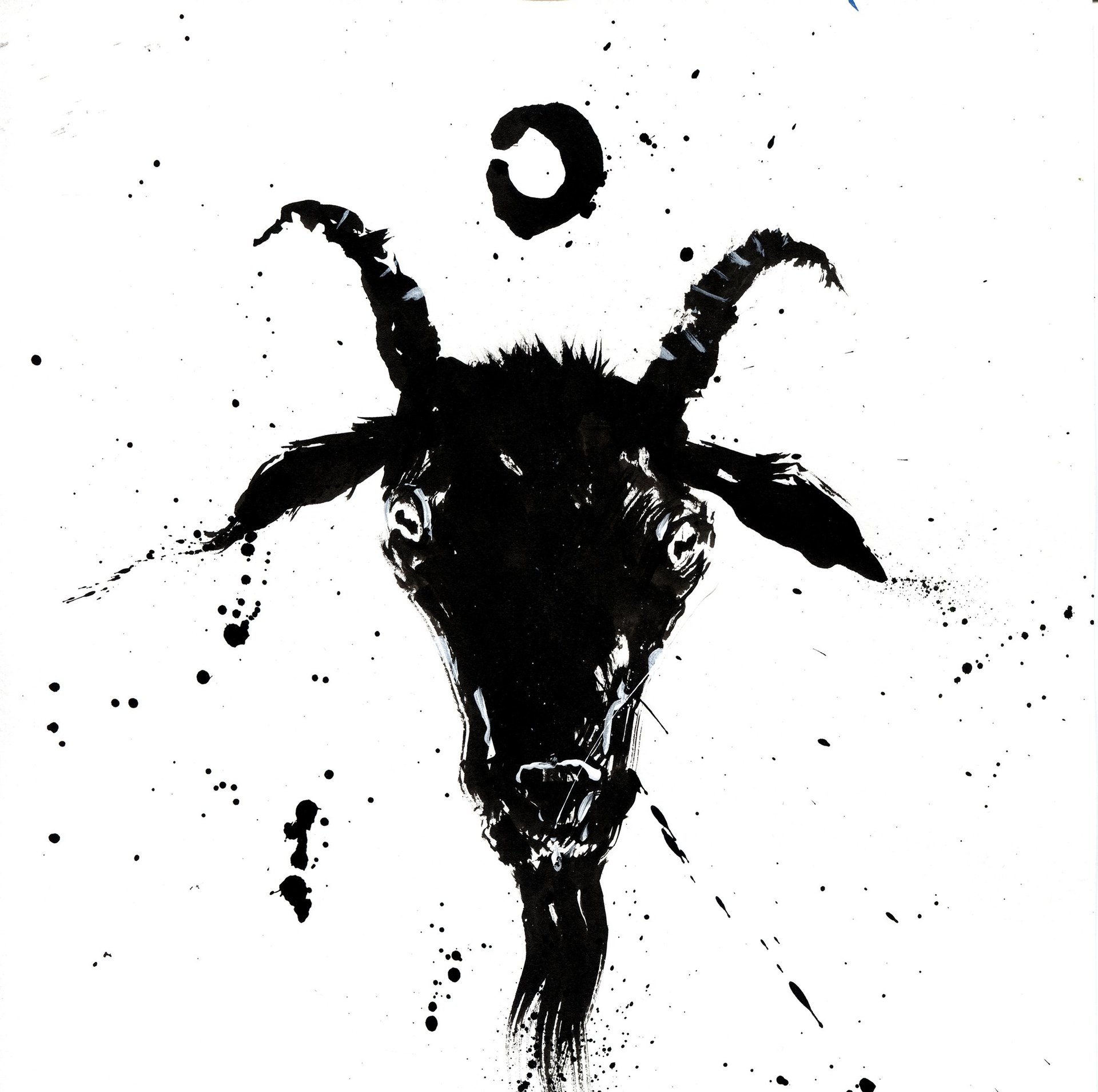
The King of Kings
A blind priest exiled to the wastes to search for a living god. A leprous philosopher, doomed to march ever onward towards death's door. Through turmoil and bitter circumstance, the fragmenting of one's identity and humanity, how long must one walk till the rains again bless the thirsting land?
SHORT FICTIONEPIC FANTASY
Baldwin E. Hart
2/13/202621 min read
The shroud was pale, it hurt the eyes. Kohl over the eyelids shielded just enough, but a single overt glance sent a surge of piercing thunder straight back into the skull. Selikkar had warned the sun was deadly, but it barely stood a dissuasion. She had spoken of prophecies and gods unrecorded, decried that Neliesen’s journey was not sufficient to appease nature’s forces, yet It departed, and It walked into a storm It could not see to test the legitimacy of Its order’s teachings.
The sand burned wherever it hit the skin, like bee stings of flaming magma which overstayed its physical presence in lingering pain. Thus, the rags worn were gauzy and smooth, and in their brightness, cool to touch. Layer on layer, with enough air between the sheets to keep the heat out.
The shroud let through no colour, only a primal grey of smouldering ash and the glare of morning or dark of the night, and nothing no naught nothingness and empty whisper of plainest silence. It appeared like smoke to fire, like dust to sandals, like ambient moisture to sea. The faintest remnant of vision, lingering in the nebulous space somewhere between the pupil and the soul, it merely let the light’s value be known.
The storm sounded of human cries, even though no living soul was present beyond the bounds of Neliesen’s robes. It moaned and yelped, at times warbled like a woman throat singing. The waterskin was running dry, little more left to induce delusions, or had it already? The lips were too chapped to whistle, yet a whistle came, more than the wind, less than a human. The cries of the sand and the winds appeared animalistic, living with pumping blood, with breath in lungs and tears in eyes, like a tremble of consciousness amid dead stone. Or mayhap it was the overwhelming dryness in which even a droplet seemed alive.
The whiff of dust would follow long after the desert was left behind, that much Neliesen was prepared for. And It would wash Its hair and cut Its nails, but the scent would linger, reluctant to let go. People would know It had strayed from the cities, it would take another month perhaps to rid Itself of the muddy grit embedded in every wrinkle, even for a youth wherever it dared to cling, the smell of sweat-soaked dust in every crevice. The wet and the dry mixed on the skin as it did in medicine, a vision of a harmonious universe somewhat trivialised, brought down from a pedestal into the flawed human fingers with their evergrowing, everchanging surface. Neliesen was old enough now to understand both the grand and the minuscule. Child of dual physicality, It had received the privilege of priesthood since Its youngest years. Not many did. Most priests received their enlightenment pubescently, when their attributes decisively strayed from their minds’ perception. So had been the fate of Selikkar. She now served as the guardian of the grand temple and a mentress for the new generations. Her position had never been total, she could not accede to such an honour through her common anatomy, only the fortunate, special children of mediate form were ever deemed worthy of high priesthood. The lightly tarnished copper earrings she wore remained a mark of humble mediocrity.
A hint of rust on the tongue served as a reminder of the body’s fragility. Another vein burst, another tooth chipped, an acidic aftertaste, a bitter chokehold of gradually depleting water rations. There still was a single pitcher left, but the walking distance remaining made it shrink in plain sight. Dryness parched the skin, it cracked the knuckles raw, stripped the youthful face of plumpness. Blood thickened with every drop of sweat secreted, limbs weakened, muscles quivered, and the movement of the body slurred. In the heat, it was the curse of the moon It blamed for their shortcomings, Its body’s deteriorating capabilities, dryness was merely a catalyst. Yet the heat slowly dissipated, as everything in this universe eventually would, as the pain of the sunlight dimmed.
‘Terrible fate has met the moth. The fire it craved so devours,’ a voice slithered.
It trembled. There was no reason for human presence in the vicinity.
‘Who are you? Where are you heading?’
The voice floated somewhere east of It, seemingly not that far away, but steaming sand distorted sound’s perception. ‘He cried and cried and nothing came. Only the stones are listening anymore…’
With the queer voice came a shiver, the words were difficult to place, perhaps a northern dialect of some sort, a song of a bard, an epic of a warrior recited barely audibly yet harsh, the ballad of a lost empire. The voice was masculine, rough and exhausted.
‘Painful is ignorance in its emptiness, more painful consciousness in its overflow,’ he continued. He preached, yet recited, his words tasted of slowly simmered poetry and not of a spur of the moment.
‘Light of the stars makes beetles glisten like gold. You cannot know a fortune from venom.’
The voice drifted closer, loud and snappy, reachable almost, so It extended Its arm out.
‘He bellows, the beetles chirp, nothing makes sense anymore under the veil of universe unfinished,’ he cried. He never replied to any question lost in his thoughts, but if he had water, by any slimmest chance, he would become a saviour. And when Its grasping hands touched nothing, It waved them around in desperation. Nothing. And the voice was no more, not even a breath.
With the voice gone, there was only the wind sounding of moans just barely human. But It knew that was merely the wind, no words, no pleading, and no water. Or was there—? The faintest hint of a dribble, a trickle, a stream murmuring, the sounds of life pulsating, nearby. But the dryness… The dryness impossible, scorching, seeped through and through with leather and sulphur. There was no moisture in the wind. The murmur was coming from everywhere and nowhere at once, it was but a whisper in the lone lone mind.
And with the ghost of the water dead, darkness enveloped the land. The shroud let no ambience of the moon appear, only the blackness of the night all over, yet the night felt throbbing with infection, like the stream of water icy, of life and of hope extinguished, like the blood of the veins boiling, of rage and of revenge enflamed.
The blood moon. Many winters before, Neliesen lay naked at the altar of the god of knowledge, the line of Its figure simultaneously sharp and soft in its contour, with Its monthly worship duties to fulfil, to pray with incantations for seven hours through seven nights in seven increments repeated. Head shaven clean the evening before, Its jawline cleaned of fuzz which failed to be called a beard, hands and feet washed seven times with herbs from the northern mountains, and shapes over Its tattooed body drawn in white and turquoise to complete the ritual. The moon was bleeding red, visible straight through the oculus at the centre of the temple’s chamber, and then, right then, Its tongue slipped and stumbled, in the moon’s presence, in its holy gaze, unwashable. Only for a breath, a word, but it was done. The following morning It woke up sightless, eyes sensitive to the light of day a hundred times more, but shrouded.
Fate dictated by the gods’ virtue, cursed by the gods’ ruthlessness. Illness was punishment for waywardness, to lose a limb or a sense was repentance. Many cried to attempt placation, many grieved their own fate, removed accountability and blamed the gods for injustice, at worst they deemed themselves innocent. Neliesen knew what It had done, It grieved the mistake more than the gods’ decision.
It woke blind as always, not even the virtue of the journey unending could reverse judgements. Into dryness again, and even the last drops in the pitcher felt dusty. Each step sunk deep into sand, it cost proper effort to wade through. It was a poor day for walking, the heat robbed one of control and muscles felt like wild horses frenzied before a chariot. But with the waterskin empty, surrender meant death. All of a sudden, a huff, a human breath, no… a hallucination, again. It sounded closer as time passed, dimensional, palpable. Neliesen forced the muscles of Its legs to outstretch further for the heavy breath’s source.
It extended Its arm only to brush upon a sliver of bandage.
‘Do not touch,’ spoke a man.
And so, he was real.
‘Why so?’
‘I’m a leper, I should not be touched.’ His voice, tortured and trembling, never seemed to know relief. The rasp and wheeze in his throat increased at higher vowels, straining painfully against tracheal damage.
‘Brings it pain to you?’
He took a few outbreaths, perhaps he shook his head or gestured briefly. ‘Spreads infection.’
The leper walked slumped and limping, that much was evident from the rub of his robes alone. He struggled to pull steps, to engage his limbs, yet he walked at an acceptable pace. Had he not, perhaps Neliesen would even be ready to adjust Its pace, just a touch, if only to accommodate another soul.
‘Have you any water?’ It brought Itself to ask eventually.
‘I have a gourd tainted by my affliction.’
‘If not for your water, I shall die before the moon draws a crescent.’
There was a silence, a burdened breath with the grit of an atrophied windpipe, then the rustle of robes more vigorous than expected.
‘Use your life well before the symptoms grasp you,’ he wheezed, shoving the flask into Its chest.
He kept close, at a distance enough to lessen the risk of transmission, but close enough to quietly converse, even in the face of the wind and the sand hissing. The leper spoke of grand ideas at times, he asked few questions, he mostly mused about the world’s creation, the source of life’s energy and the point to poetry. He asked not, but patiently waited for Neliesen to speak as well, at times It did, other times he continued to pour more out. He said the world had begun with thought, that the only way anything could ever exist was if it was understood.
Neliesen considered such words a blasphemy, but then It thought again. What world was it if it was to be empty of rumination? Consecration in contemplation, he put forward. However against any common teachings, his reasoning rang true. In moments when the wind died down, he spoke of cities which had not been seen populated for ages, of the planet burning and the thought freezing.
‘A city dweller?’ It asked.
‘Far from here, but yes. Tusamel, the Wandering Star.’
Its heart skipped a beat. ‘It can’t be. Nobody—’
‘To many I am nobody.’
‘And your name?’
He hesitated, he brushed the bandage on his arm with his fingers.
‘Lynredd… But I use it no more.’
Neliesen understood. ‘What do I call you then?’
‘Friend.’
His philosophies carried with the wind. Neliesen hoped these would one day reach a populated place, that the wind would forshape the words and mould them widely recognised. The friend seemed older than time and simultaneously mayhap younger than Neliesen Itself. The voice from his lungs grew weaker, but he spoke, he shared the last twitches of his mind’s empire for he anticipated it would not remain for long.
He followed like a shadow, like the scent of a perfumed oil on the skin days after it had been applied. He walked not in front, not behind, but parallel, as if he knew where It was headed.
‘What is it that you seek?’ It asked a question which had never been asked, yet should have.
‘As every other traveller. You, for that matter?’
‘Me, I’m in search of salvation.’
‘You’ve got your answer then, traveller,’ the friend spoke with a grin in his words.
‘It’s Neliesen, the High Priest of Nukkadur.’
Breathing sounds. A swig of the gourd, then a hand with it back to Neliesen, it touched Its arm, but the friend’s fingers never did.
‘I’m nowhere close to any gods, they have forsaken me,’ he said with no bitterness, as if it were irrefutable and entirely natural.
‘At what fault?’
‘Humanity’s sins.’
Had he ever been guilty, It wondered, or was the price in suffering an everlasting lie? The way of the world tainted, dirty and unforgiving, as if the gods were dead. Perhaps the ghost was right, perhaps the stones were the only ones left to listen.
‘Salvation, you said,’ he returned.
‘The King of Kings is said to rest suspended in a temple of the last standing spire.’
This was what Selikkar had described. She never elaborated on where she had gotten that certainty, she never stated directly if she had ever witnessed such a place first hand. Neliesen leaned toward legends. Everything eventually circled back to legends or tradition. Not much was ever questioned or scrutinised so long as it came from an elder’s mouth. The friend was young in body as much as he was sick, yet far older in mind than Selikkar or any of the common priestesses.
‘Will The King of Kings answer your prayers?’ he said.
Neliesen slowed Its pace, took a breath. ‘We have no other choice but to plead.’
‘A priest he might hear out.’
There was a pause, steps returning to their steady rhythm.
‘I’ll plead for your recovery, too.’
‘Noble, but in vain.’
Neliesen felt a growing notion that the friend was not merely a leper. His comportment carried the weight of a million troubled souls, almost as if he were afflicted with every ill ever known to mankind. With each chunk of skin he shed, a new lesion was felt under Its fingers, unfamiliar each time, a texture discovered anew. As the skin fell, his musings became deeper, more symbolic, or perhaps just more delirious. Neliesen could not deny him their substance, despite the slurred words, despite the fragmented sentences.
Each night the gourd was full again. No water in ear reach, no power in the leper’s body to ever stray beyond those bounds of physical perception. Magic, It thought. But It refused to ask. Be it some demonic force or a clever trick, It wished to stay clear of its awareness. If the illness was a curse, it would not spread by mouth; if a punishment, only with temptation, and so It felt compelled to ignore all warnings, to touch a hand, to feel a cheekbone. No soul could be lost to skin contact, it was the least of human interaction which would make anything feel real. The voice blended with the wind after a long enough time, it felt so distant even at an arm length’s reach.
‘Were I to die,’ he once said, ‘you’ll bury my headless corpse by a highway. And the head you’ll bring to a man named Gorseng.’
‘So this is what you seek. How will I know the man?’
‘You shall, even if it takes a thousand years to find him.’
It hesitated, winced before It asked, ‘Are you cursing me? Will I ever know peace with that weight on my shoulders?’
‘The only way to know peace is for Gorseng to meet his end.’
And so, that was the promise implied. To kill was to relieve, surely, to release pressure and end a cycle. The thought shattered Neliesen. To kill was to destroy, to contradict an inherent balance in nature, that was why one felled game with an apology and slaughtered cattle with a prayer, decisively, in one firm gesture to then use every single part to its sufficiency. To kill a man was unthinkable, it surpassed utility, infringed on the spiritual.
The Order of Nukkadur grew their own plants, raised their own cattle, lived in the mountains, but came down to the city to feed the poor. Meat was a last resort, the animals killed in mercy when their time would come. The flesh of the old might have been gamy, but a stew simmered for seven days and seven nights in acidic juices of wild fruit tenderised well. And thoughts in Neliesen’s mind simmered similarly, over the course of many moons, and when the friend came, the paths of Its thoughts had changed, improved perhaps, enriched, and It would never be the same again. Neliesen was not sure It still wanted to return. This journey was fulfilling, sufficient, and beautiful, in all its arduous exhaustion.
They walked at an improved pace ever since the self-filling gourd had been the only one in use. There still lingered the stench of butchery in the air, but that weighed down on the heart and not the back. The luggage slung over the shoulder slowed Neliesen no more, although it had deflated, cloth collapsing over the silhouettes of dwindling belongings.
‘Lost your mule to the elements?’ the friend pointed out.
‘Never had one.’
‘That satchel has always been yours to carry?’
It adjusted the strap over the robes as they had folded. ‘Forever. Even before I was born.’
‘Heirloom?’
‘Burden.’
He knew what burden was, yet he never spoke of it. He stopped one day and turned around to state that his time was running thin. There was no sorrow in his voice, not a drop of regret nor hesitation. He said he had lost his nose, that his bones were soon to become bare if not for death’s merciful embrace, that he had missed the chance for salvation and there was nothing left but to weep. Yet he wept not. Neliesen promised to weep for both of them when the time came.
‘You can take the gourd when I’m dead. Hang it on that hook you’ve left empty.’
‘And when you’re dead, I carry your head to Gorseng. Does Gorseng live in Tusamel?’
‘He lives in hiding. But you’ll find him where the wind goes silent and the morning birds sing no more. You shan’t find me before the end of the world, he said. Yet I’m not awaiting apocalypse.’
By the time the morning breeze swept their faces, the friend had settled cold and stiff. A few plaques of skin loosened under the bandages as Neliesen grabbed his shoulders, but breath there was none, and life had vented out like a plume of smoke some time after dark.
It dragged the body, arms slung over Its shoulders, not wide as a man’s but stronger than a woman’s. The corpse reeked of yellow bile run with blood and of sorrow. For a moment, Neliesen thought of a kiss, one they could have shared once perhaps, but never did. Now It was fearful to touch his face for that would spoil the mythical idea of an unrotten virtue in degenerative illness. It refused to believe the friend had ever done anything to deserve a cruel fate. He carried himself as a beggar, he spoke as a wise-man. Handsome, It thought, were his words. Was that enough for a kiss or was a face necessary?
The body was straw-thin, heavy as a human, yet in some way perhaps halved, was that the skin dropped or the water evaporated? Over the following days, it only grew lighter, it parched like a leaf dropped, like a toad sizzled in the noontime sun, and it smelled of the desert first, only then faintly of meat decaying. He sagged limp from stiffness in a day, back to stiffness as he dried, somehow he stopped appearing human, like a vaguely man-shaped fire log wrapped in bandages, like his gourd, wooded and petrified into a hollow vessel.
And when the direction of the winds changed, the taste in the mouth grew sweet, almost sickening. The sand blew in the face stronger, but it was cool to touch, filled all cavities and it became crucial to tie and bind the rags tighter. The dunes formed hills and valleys, it took one slip for Neliesen to slide down a brink, but there Its feet hit a sharp object facing the skies, a stony pike, the last spire. From there, three hundred steps east and suddenly all sound became shielded by the sheer mass of an edifice. Neliesen lay Its hand flat on the wall’s surface, dusty and uneven, unmistakably it was sandstone.
The wall extended forever, and no dip nor niche in it could be felt. Neliesen adjusted the friend’s body in Its arms and pushed until It could continue no longer. It fell to Its knees trembling, and a vestibule emerged before It, an entryway from nothing, and the gates were of brass, heavy and bitterly tarnished. It heaved the door ajar and slipped Its leg between the verticals to wedge Itself inside, then heard the metal shut with a rumble. It could not have brought Itself to leave the friend behind, It dragged him into the temple despite his growing stench.
There was an echo inside, an emptiness immeasurable and each whisper multiplied countlessly. The friend’s body fell with a gentle thud and further It followed, dragging Its fingers across a wall. There was a path of pictures subtly traced into the stone, peaks and valleys which would surely stun a sighted viewer. But perhaps there was a charm to knowing them by touch, not by shadow, for what was shadow if not absence? To touch was to feel a pure manifestation of form. The stone reflected sound like mirrors uncounted, the breath even echoed, it solidified existence far beyond the bounds of the body. And then a voice, as if that of a malformed man, unnatural, distorted.
‘Help! Bring help, I beseech you!’
It came from a chamber at the very end of the corridor. The room echoed less, Neliesen was therefore sure it housed more than a single screaming figure.
‘Who are you? I’m blind, I will not see you.’
‘I am The King of Kings. I lay spread out on the altar. I am wounded, I require healing.’
Neliesen walked until It reached an elevation, It climbed the pedestal and on the altar It felt no man, but the wet pelt of an animal, sticky and warm liquid flooding the stiff bristles of its coat. It felt the throat’s cut slashed ritually, the leaf-like flopped ears, the horns on the creature’s head. There lay a sacrificial goat all bloodied and it had dubbed itself The King of Kings.
‘I cannot help you… The blood, it’s leaking, pulsating out, you’ll die any moment.’
‘You have to! Need to!’ the voice shrieked. Its tone morphed unevenly, ripped into the soul, shrill and uncanny, ungodly. ‘I’ve been here for two hundred cycles of nature bleeding, no one ever came until you!’
‘No time… I do not have herbs anymore, no bandages… I’ve come to plead, but here you are in agony…’
In a sonorous voice, it articulated, ‘I shall answer your questions if you save me.’
Neliesen ripped a skirt off Its robe to wrap a bandage, It felt an artery’s ridge to firmly press and stem the flow.
‘Is the drought a punishment from above? Is there a way to salvage the plants, to shield the people from starvation?’
‘The seasons come and go, the drought shall pass, but I am no one to tell you how and when.’
‘Are you able to bring about a better time? To help the people in exchange for a sacrifice? I’ll die for them here if I need to. Tell me if that is what you need, for me to lay my head on the chopping block. Just please, please…’
‘You’re futile. Futile! For I am still dying.’
The blood stopped gushing, losing its velocity and now pooled below, but there was none left to flow anymore. The goat lay motionless, no tension in the muscles, no breath from its mouth.
Neliesen twitched. If not for The King of Kings, all was lost. It touched the goat’s carcass, tried to find a single sign of a breath, but it was gone. It let Itself slide onto the pedestal’s floor, caring not for the blood staining Its robes. And It wept. Finally, It wept for the friend and for Its people, and for the fate of the blind one infected.
Then It heard a moan muffled. The altar’s sacrificed flesh bellowed, Neliesen bolted upright and grabbed the goat by its fur again.
‘Danger! You’ll never know!’ it gargled. But it was dead. It spoke through a clenched throat, the muscles barely slugging. ‘Your leprous loverboy lies rotting! You’ve failed, failed everyone!’
Neliesen recoiled at once, a shiver passed despite Its overheated skin. Shaken, It took off running.
‘Breastless woman! Impotent man! Freak of nature, heavens’ outcast!’ It heard the voice echoing through the ancient hallways. ‘Run, you feeble shaveling! Forsake your people, forsake the earth you’ve grown from! Die! Die! All die, dirt and filth of the earth!’
It pulled the friend by his stiffened arms, forcing open the bronze gate. With nowhere farther to run, at least the water was plenty. The shrieks fell silent. There was nothing but sand and the wind howling cries again. And the whispers of the friend deluded in the back of the mind, repeating ‘I would care, if I could, but I cannot bring myself to feel anymore.’ And yet he had walked. If he had cared for the head and for Gorseng’s end, he had been capable of feeling.
That night, Neliesen dreamt of the shrieking goat, but it was wrapped in bandages and its voice sounded like Lynredd.
It woke restless, but it pushed further. A few nights, each turbulent, the body growing weaker again, as if the heat sucked the life not only from the corpse, but also from the living, and the shroud awakened It with the pain of the brightest morning. There were noises of a frequented tract flickering in the distance between the waves of undulating air, soon the road would become a stream of life again, from there cities were to be reached straight as an arrow shot. It waited until midnight to say Its goodbyes to the friend, he now felt waxy to the touch, stiff, but malleable. It cut off his head, as for the wish. The skin was already petrified, dried and leathery, but the insides brought tears to the eyes. Neliesen unwrapped the bandages from the face, it touched the noseless, peeling skull, malnourished first then dried, the high cheekbones, the long hair, the nose shaft open, the skin of the lips cracked, the half-open eyes already dried and decaying. With Its breadknife, It pierced the bony back of the nasal cavity to pour out the liquid rotting brains. From that, there was no more stench to withstand, only dryness.
It left no marking on the grave, the head It wrapped in the robes remaining, and It hid it in the satchel, filling up the half-empty space left of the waterskins abandoned.
In the morning, It asked the first cart driver passing if she was headed to the capital, and offered to join her. The woman was a brewer, she drove to sell her finest spirits to the highest elites of the city, she told stories of her youth as she learned the trade from her mother and watched her mother wither as she succumbed to illness. She considered it an honour to continue the legacy. As It listened to her tales, It could not wave away the thought of the mummified head resting on Its lap. With illness came burden, it rubbed off on all creatures and objects, not merely because of infection spreading, but the spiritual impact it left behind, Neliesen could not let that go.
‘If I asked you to take me to the end of the world, where would you stop?’ It inquired. There was not much left but to take chances. ‘Is there a moment where there is nothing anymore? Anywhere that’s not the desert I came from.’
‘I don’t know what you’re looking for, but I know an inn called The World’s End,’ she said.
And when they stopped, the woman handed Neliesen a jar of tincture. ‘Let it serve you better than it did my mother.’
Neliesen nodded and promised shelter in the monastery if need arose, but deep inside it knew the drought would leave little to aid anyone. As it entered the inn, all chatter dimmed. It realised then that Its robes were still covered in streaks of rotting goat blood whose stench had become unnoticeable.
‘Gorseng! Does this name ring familiar?’ It yelled out to the point of Its voice cracking.
‘No such man—’
‘Let it go, I’m not afraid of a blind monk,’ a man spoke. His voice was fainter, more fatigued than the previous one, the voice of old age. ‘What is it that you seek, priest?’
It clutched the satchel’s strap. ‘This is a matter of private concern.’
‘Follow me then, I got my quarters above.’
Neliesen followed the thud and vibration of his steps, stairwell to the top of the building, and he opened a wooden door with a creak. He rustled some objects around, it was difficult for Neliesen to identify by sound alone.
‘Is that your own blood?’ he asked eventually.
‘It’s the blood of a goat. I know it sounds implausible…’
‘It’s sufficient. So, what now?’
It pulled the cloth-wrapped bundle from Its satchel and let the head roll onto the table as it unravelled. There was leaden silence between the two, their breaths managed to synchronise, only then did Neliesen speak.
‘Lynredd did not make it. He asked me…’
‘I told him he wouldn’t find me before The World's End.’
It let the silence mature before It said, ‘You wanted him to return.’
‘Sometimes, you love a man so painfully you insist upon it, despite all the evil dividing the two of you.’
Neliesen could hear Gorseng pacing around the room, he fumbled with keys between his fingers nervously, yet he did not say a word to chase It out.
‘Was there evil in his heart?’ It asked, doubtful.
‘We were both evil to each other, and each other only,’ the old man grunted. ‘His rage and sorrow broke him down, but it never scathed another soul. He deserved not to die.’
It dropped the bundle of robe shreds on the table and bit down on Its lip briefly.
‘What will you do with his head?’
The muscles of Gorseng’s face affected his tone as he winced. ‘Burn it. To give him back his peace.’
Grief hung thick in the air, it was only appropriate to let the man pay respects in solitude, but before Neliesen turned to leave, Gorseng grabbed Its shoulder. He squeezed it, but he let out no more sound. A few breaths and he let It go, the moment passed, and the ghost of the moth fluttered in the fire which had burnt him.
The road up into the mountains was known, it felt like the grip of an old chisel worn by one’s own touch. After many moons amongst the oceans of sand, the moisture lifting off the foliage alone, even in their driest, most agonising gasp, salved the skin and the soul alike. The murmur of the water had gone mute, the river turned stream sounded of flow no more.
With a gut-twisting realisation, Neliesen entered the monastery to be greeted by Selikkar’s gentle, low and balmy voice. She failed to quench the worry in her tone, it weaved with care and relief of Neliesen’s comeback, but it was present at the base, forever and unchanged. It intended to tell the witches and the priests that the temple was empty, and no king awaited, but that the ancient hallways had flooded Its soul with a vision of enlightenment, and the prayers shall grant them salvation if sang with enough conviction. It recited the verses of the knight’s epic It had heard in Its most delirious moments, the prayer of the lost temple, It dubbed those. It feared showing the gourd to the rest, It feared to speak of the horned demon screaming.
The shroud darkened like tea brewed, yet Neliesen could not lie down to rest. It continued pacing, with the thought of the goat returning, prying Its sleepless eyelids open. Each day they prayed, as instructed by the High Priest of Nukkadur, their muse, their salvation, their liar, their impostor, their traitor. Once, It smelled the whiff of desert sand and human flesh, enflamed, carried up the mountain with the wind, a malodour none other could place, but It knew. Not a moon had passed, the grief had not subsided, or perhaps he had grieved for so long in absence that the leper’s head returned had proven nothing short of closure.
Painful morning blew of moisture for the first time in years, the sound of pouring rain filled the halls of the monastery like a band of horses galloping, water like hooves thumping, crowded and uneven, alive. They ran for seven nights and seven days, with light and thunder in the distance but never touching the city, and the dream of the shrieking goat never returned again.

Art by Kim Holm
Logo by Anastasia Bereznikova
Contact: editors@thearcanist.net | business@thearcanist.net
Copyright © 2025 The Arcanist: Fantasy Publishing, LLC
ISSN: 3069-5163 (Print) 3069-518X (Online)